From the Desk of the Executive Director of the Physician-Patient Alliance for Health & Safety
By Michael Wong, JD (Executive Director, Physician-Patient Alliance for Health & Safety)
You Can Improve Sepsis Care
You can improve sepsis care by listening to the sessions of the World Sepsis Congress – for doing this, you will receive continuing medical education (CME) credits. To take the courses, please go to our CME course page.
The World Sepsis Congress was the very first time that CME credits have been offered for Global Sepsis Alliance (GSA) activities, and the Physician-Patient Alliance for Health & Safety (PPAHS) is honored that the Global Sepsis Alliance chose us.

GSA and PPAHS will also be hosting on April 23, 2024, the World Sepsis Congress Spotlight, “Unmet Need in Sepsis Diagnosis and Therapy”. For more information on the 2024 Spotlight, please click here.
Hacking Health – Can the Next Generation Move the Patient Safety Needle?
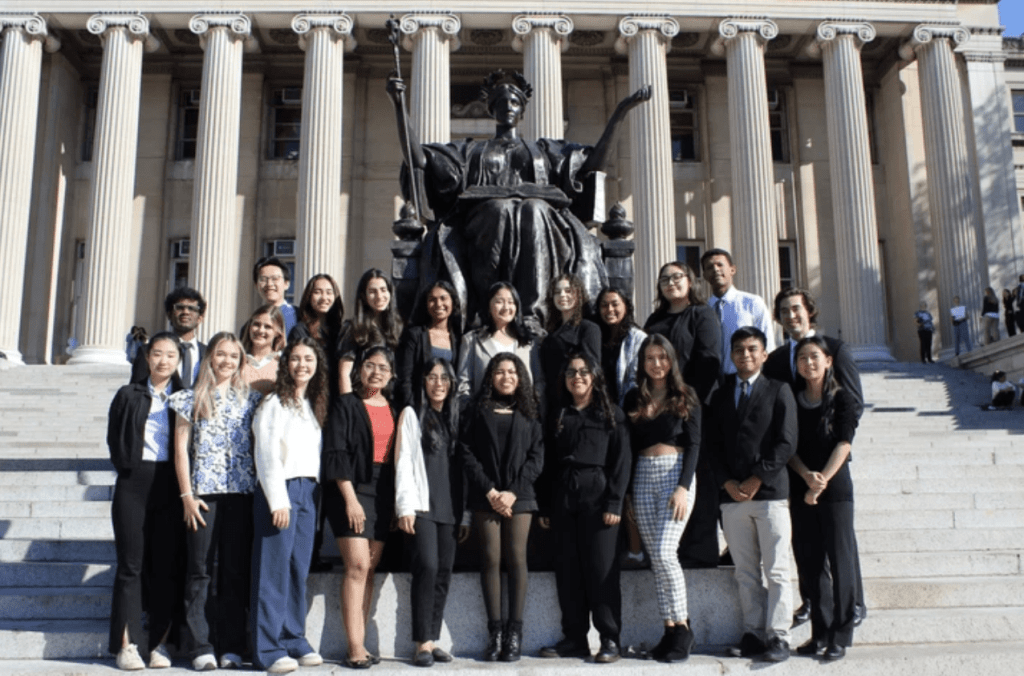
“Can the next generation move the patient safety needle?” – this is the question that I asked myself as I took the subway to Columbia University where I had been asked to be a mentor and judge for Hacking Health 2024 hosted by the Columbia University Biomedical Engineering Society.
For those like me who went to college when there was no subject called “biomedical engineering”, according to Michigan Tech biomedical engineering “focuses on the advances that improve human health and health care at all levels and is the application of the principles and problem-solving techniques of engineering to biology and medicine. This is evident throughout healthcare, from diagnosis and analysis to treatment and recovery, and has entered the public conscience through the proliferation of implantable medical devices, such as pacemakers and artificial hips, to more futuristic technologies such as stem cell engineering and 3-D printing of biological organs.”
Hacking Health 2024 was a weekend-long hackathon where teams gathered to create and develop projects to solve pressing healthcare issues.
The students that I met were from Columbia as well as many other colleges on the East Coast of the US (such as Brown, John Hopkins, and the University of Pennsylvania), and they had great ideas – from using eyecare as a diagnostic tool to streamlining emergency department visits for heart attack patients.
The winning team was “Anti-Sepsis”.
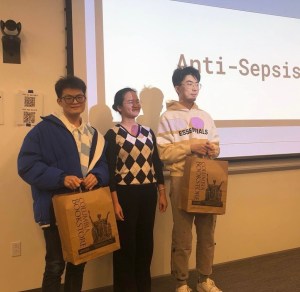
Not only did this team focus on sepsis, which is to be highly commended, as most teams focused on more “popular” issues, such as cancer and diabetes, but their solution was According to the Global Sepsis Alliance:
Sepsis is a global health crisis.
It affects between 47 and 50 million people every year, at least 11 million die – one death every 2.8 seconds.

The answer – yes, the next generation can move the patient safety needle – and probably in ways that we cannot currently imagine!
The Anti-Sepsis team was composed of Columbia Mailman School of Public Health students – Siqi Wang, Xinyi Shang, Huachen Shan, and Zhiheng Shi.
Congratulations, Anti-Sepsis!