From the Desk of the Executive Director of the Physician-Patient Alliance for Health & Safety
By Michael Wong, JD (Executive Director, Physician-Patient Alliance for Health & Safety)
Moving the Patient Safety Needle Through Collaboration
By working together – collaborating, creating synergies – we can improve patient safety and the quality of patient care.
I am happy to announce two collaborations – the first is a deepening of an existing relationship and the second is a new one.
Moving the Patient Safety Needle – Appointment to the Board of Directors at the Respiratory Compromise Institute
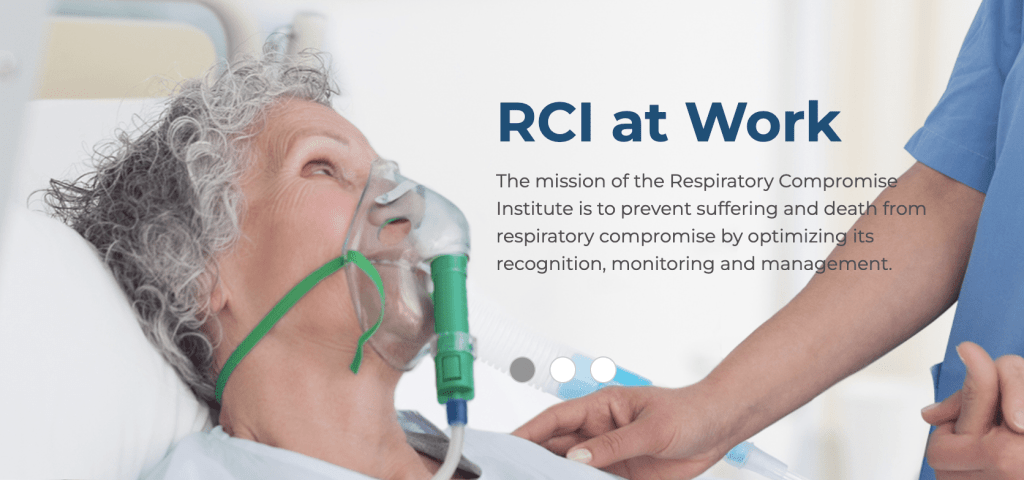
In 2015, I attended the inaugural meeting of the Respiratory Compromise Institute (RCI) as the only patient safety advocate among representatives from leading US medical societies. The RCI is a coalition of the following organizations:
- American Association for Respiratory Care
- American Association of Nurse Anesthetists
- American College of Chest Physicians
- American College of Emergency Physicians
- American Society of Anesthesiologists
- American Thoracic Society
- National Association of Clinical Nurse Specialists
- National Association of EMS Physicians
- Physician-Patient Alliance for Health & Safety
- Society of Anesthesia & Sleep Medicine
- Society of Critical Care Medicine
- Society of Hospital Medicine
The mission of RCI is to educate – as the RCI mission is to “educate the medical community so that the onset of respiratory compromise can be detected to mitigate respiratory failure and arrest.” However, since its inception, RCI has been more think tank and research organization than educator, and the most notable achievement of RCI has been the publication of “Respiratory Compromise as a New Paradigm for the Care of Vulnerable Hospitalized Patients” in 2017. This research found:
Respiratory compromise may arise de novo or may complicate preexisting lung disease. The group identified distinct subsets of respiratory compromise that present similar opportunities for early detection and useful intervention to prevent respiratory failure. The subtypes were characterized by the pathophysiological mechanisms they had in common: impaired control of breathing, impaired airway protection, parenchymal lung disease, increased airway resistance, hydrostatic pulmonary edema, and right-ventricular failure. Classification of acutely ill respiratory patients into one or more of these categories may help in selecting the screening and monitoring strategies that are most appropriate for the patient’s particular pathophysiology. Standardized screening and monitoring practices for patients with similar mechanisms of deterioration may enhance the ability to predict respiratory failure early and prevent its occurrence.
Deepening my involvement with RCI, I have been appointed to its Board of Directors. From that position, I hope to make RCI more of an educator and less of a research group, according to its original mandate.
Moving the Patient Safety Needle – Champion for Patients for Patient Safety

I am also pleased to announce that Patients for Patient Safety (PFPS) has made me a Champion for Patients for Patient Safety. The vision of PFPS is:
A world in which no one is harmed in healthcare and every patient receives safe and respectful care, every time, everywhere.
The birthplace of PFPS is the WHO (World Health Organization) London Declaration, which proclaims – “We call for honesty, openness and transparency. We will make the reduction of healthcare errors a basic human right that preserves life around the world. We, Patients for Patient Safety, will be the voice for all people, but especially those who are now unheard.”
In its entirety, the London Declaration states:
We, Patients for Patient Safety, envision a different world in which healthcare errors are not harming people. We are partners in the effort to prevent all avoidable harm in healthcare. Risk and uncertainty are constant companions. So we come together in dialogue, participating in care with providers. We unite our strength as advocates for care without harm in the developing as well as the developed world.
We are committed to spread the word from person to person, town to town, country to country. There is a right to safe healthcare and we will not let the current culture of error and denial, continue. We call for honesty, openness and transparency. We will make the reduction of healthcare errors a basic human right that preserves life around the world.
We, Patients for Patient Safety, will be the voice for all people, but especially those who are now unheard. Together as partners, we will collaborate in:
- Devising and promoting programs for patient safety and patient empowerment.
- Developing and driving a constructive dialogue with all partners concerned with patient safety.
- Establishing systems for reporting and dealing with healthcare harm on a worldwide basis.
- Defining best practices in dealing with healthcare harm of all kinds and promoting those practices throughout the world.
In honor of those who have died, those left disabled, our loved ones today and the world’s children yet to be born, we will strive for excellence, so that all involved in healthcare are as safe as possible as soon as possible. This is our pledge of partnership.
From my experience with prior patient safety projects, collaboration always makes projects more impactful and stronger. So, I am pleased to announce that I am a champion for PFPS. I look forward to working with other champions for patient safety to magnify efforts to improve patient safety and the quality of patient care.