By Michael W. Wong, JD (Executive Director, Physician-Patient Alliance for Health & Safety)
Access to Healthcare is a Patient Safety Issue for Pregnant Women
The United States spends more than all other high-income countries on healthcare – $12,742 per person in 2022. Unfortunately, this spending is not bringing enough access to healthcare for pregnant women.
A recent report by March of Dimes, “Nowhere to Go: Maternity Care Deserts Across the US,” highlights the dismal state of access to maternal care in the United States.
“For too many families across the US, the ability to have a healthy pregnancy depends on where they live,” said Dr. Amanda Williams, March of Dimes Chief Medical Officer. “Our 2024 report underscores that maternity care is still not prioritized in our country and there is an urgent need for systemic changes to improve outcomes for moms and babies in the US and to ensure that these families have access to the care they need and deserve.”
The March of Dimes report found that more than one-third of US counties are maternity care deserts, where there are no birthing facilities or obstetric clinicians:

Maternal Desert states are North Dakota, South Dakota, Alaska, Oklahoma, and Nebraska, with the highest percentage of counties in these states without access to maternity care.
What Does Poor Access to Healthcare Mean?
In Maternal Desert areas:
- Pregnant mothers receive prenatal care in the fifth month of pregnancy or later.
- Babies are more likely to be born before 37 weeks gestation.
- Pregnant mothers have to travel 2.6 times longer to reach a birthing hospital.
So, what impact does poor access to healthcare have?
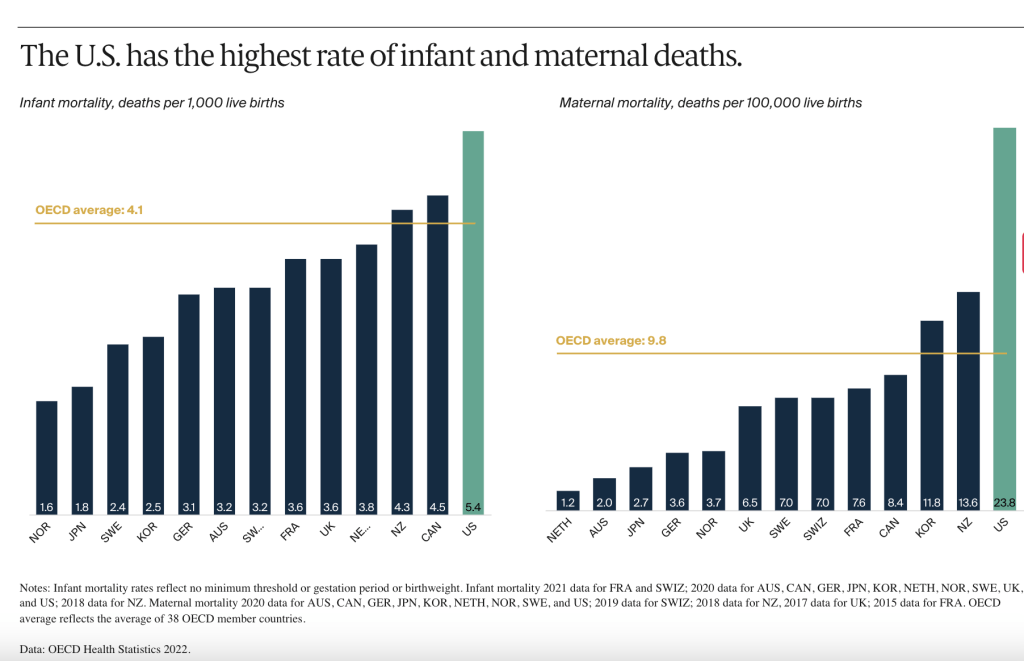
A report by the Commonwealth Fund found that poor healthcare access was a major factor to the high infant and maternal mortality rates in the United States – the US infant mortality rate is 5.4 deaths per 1000 live births, which is significantly higher than 1.6 deaths per 1000 live births in Norway, which has the lowest mortality rate:
Women in the U.S. have long had the highest rate of maternal mortality related to complications of pregnancy and childbirth. In 2020, there were nearly 24 maternal deaths for every 100,000 live births in the U.S., more than three times the rate in most of the other high-income countries we studied. A high rate of cesarean section, inadequate prenatal care, and socioeconomic inequalities contributing to chronic illnesses like obesity, diabetes, and heart disease may all help explain high U.S. infant and maternal mortality.
Moreover, for black women, their healthcare situation is even worse. “Black women are three times more likely to die from pregnancy-related causes—a tragedy exacerbated by a lack of resources to care for them, let alone save them,” said Tatyana Ali, American actress and March of Dimes celebrity advocate. “As a Black birthing woman who experienced firsthand the inequities of our maternal healthcare system, we must do better for ourselves, each other, and our communities. The health of moms and babies needs to be a priority in the US.”
Pregnant Mothers Deserve Full Access to Healthcare
It is a travesty that in a country that pays more than all other wealthy countries that one of our most vulnerable patients – a pregnant mother – can not get access to healthcare.
We must do better for our pregnant mothers!