Category: Practices & Tips

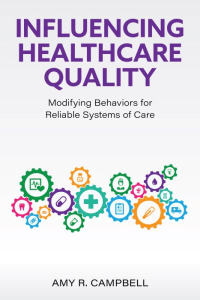
Stop Making Quality Too Hard: Why My New Book is Your Quality Companion

By Amy Campbell, PhD, RN, CPHQ, LSSBB

After more than 17 years in healthcare quality, I have seen it all, projects that soared and  projects that stumbled. Some of my biggest “fails” turned out to be my first attempts at  learning, and those lessons shaped how I approach improvement today. Too often, we make  quality work harder than it needs to be. My passion has always been teaching, whether it is  guiding executives through complex systems or mentoring graduate nursing students who are  just beginning their quality journey. But I have struggled to find a resource that feels  approachable, something you could pick up quickly, enjoy, and return to whenever you need  guidance. 

Continue reading “Stop Making Quality Too Hard: Why My New Book is Your Quality Companion”

Breaking the Stigma Around Dual Diagnosis

Editor’s Note: Breaking the stigma around dual diagnosis means seeing the full picture. Learn how truth, empathy, and integrated care lead to real recovery. In this thoughtful article, Pam Reiman discusses the situation when mental health problems and substance use collide.

By Pam Reiman, JD, LCSW, CAADC, CSAC (Executive Director at Bridging the Gaps, Inc.)

A person in a shirt with glasses looking stressed and leaning against the wall.The stigma around dual diagnosis shows up in quiet moments. A person with depression who drinks to cope may be told they “just need willpower.” Someone battling addiction might have their panic attacks dismissed as excuses. When the two conditions overlap, one often hides the other. The result is missed signs, unfair judgment, and delayed care.

Continue reading “Breaking the Stigma Around Dual Diagnosis”

Elderly Care: A Guide for Families New to Caring

By Michael Upton

Caring for elderly family members can be one of the most rewarding, but also challenging tasks we will ever take on. Whether you have just become a caregiver or are only starting to think about what it means to care for an aging loved one, you must equip yourself with the necessary information and resources to make sure your relative can remain safe, fulfilled, and happy in their later years. 

Elderly Care Guide

Continue reading “Elderly Care: A Guide for Families New to Caring”

Practical Strategies for Coping With and Addressing Chronic Pain

By Dr. Jeffrey McWhorter, D.C., M.S.R., A.R.T. (founder, owner, and operator, McWhorter Chiropractic and Neurological Rehab (CNR))

Chronic Pain
Image source – Marcus Aurelius: https://www.pexels.com/photo/photo-of-woman-holding-her-head-4064177/

While everyone experiences some pain from time to time, chronic pain can be an incredibly debilitating condition that affects every aspect of a person’s life. Over-the-counter medications like Aspirin or Ibuprofen can provide temporary relief from chronic pain symptoms, but soon enough the pain will return and get in the way of your daily life. If you’re tired of dealing with chronic pain symptoms every day, it’s time to explore more practical and cutting-edge strategies that help you effectively cope with and address your condition.

Continue reading “Practical Strategies for Coping With and Addressing Chronic Pain”

The Importance of Infection Control in the Healthcare Setting: Tips for Medical Professionals

The Importance of Infection Control in the Healthcare Setting: Tips for Medical Professionals

Editor’s note: This article is an opinion article written by Kelly Koeppel who is an author, editor, and digital marketing specialist. She is also an editor of Aging.com that submitted this article.

By Kelly Koeppel 

Every year, millions of people are affected by hospital-acquired infections. These infections can have serious, sometimes fatal consequences for patients in the healthcare setting. Infection control plays an essential role in reducing the spread of these infections and keeping patients safe. In this article, we’ll explore the importance of infection control in the healthcare setting and discuss tips for medical professionals to prevent the spread of infection. From standard precautions and protective equipment to best practices for handwashing and screening patients, we’ll cover all you need to know about infection control in healthcare facilities. So let’s get started – it could be a matter of life or death!

Continue reading “The Importance of Infection Control in the Healthcare Setting: Tips for Medical Professionals”

Our Love-Hate Relationship with Opioids: 3 Things Clinicians Can Do to Improve Patient Safety and the Quality of Patient Care

By Michael Wong, JD (Founder & Executive Director, Physician-Patient Alliance for Health & Safety)

Our Opioid Dichotomy

Opioids are something we love and hate, all at the same time. On the one hand, they are a great pain reliever and are often used to provide analgesia and supplement sedation during general anesthesia or monitored anesthesia care. On the other hand, opioids can be addictive and too much opioids can lead to opioid overdose and death. Justine Igwe (Nursing Student in Nigeria at the University of Nigeria Enugu Campus) recently wrote about opioids’ pain relief vs. addiction/overdose dichomotomy:

Continue reading “Our Love-Hate Relationship with Opioids: 3 Things Clinicians Can Do to Improve Patient Safety and the Quality of Patient Care”

How Family Caregivers Can Help Healthcare Professionals Provide Better Care

By John Schall, CEO of Caregiver Action Network, and Joy Yoo (Data Analyst, Houston Methodist Research Institute; Researcher, Physician-Patient Alliance for Health & Safety)

The Key Role of Family Caregivers in Delivering Healthcare

Family caregivers have become an essential key to providing patient care. As Richard Adler & Rajiv Mehta of the National Alliance for Caregiving write:

Millions of Americans are currently providing care for a family member, friend, or neighbor, typically because of illness, injury, or frailty. Their efforts range from providing emotional support and helping with routine household tasks to providing care 24×7 and carrying out complex medical procedures. Though those receiving care are of all ages, the amount of caregiving will certainly rise as our population ages.

Many of the functions that caregivers play are similar to those provided by nurses. It is therefore essential that healthcare professionals work collaboratively with caregivers to ensure that their patients are receiving the optimal care.

Continue reading “How Family Caregivers Can Help Healthcare Professionals Provide Better Care”

Better Asthma Control Starts with Correct Inhaler Use

Better Asthma Control Starts with Correct Inhaler Use

By Sara Malik (asthma patient studying to go to medical school)

After getting diagnosed with severe asthma at the tender age of three, friends and family often reassured my parents that I would “eventually grow out of it” and that it was probably just “seasonal allergies.” Yes, it is true that seasonal changes can trigger asthma and that many people may outgrow this condition once they reach or pass adolescence. However, it is crucial to recognize that once an individual has developed a sensitive respiratory tract, their airways remain susceptible to asthma triggers for life.

The World Health Organization defines asthma as a long-term disease in which the “air passages in the lungs become narrow due to inflammation and tightening of the muscles around the small airways.” Asthma is a chronic disease that I have never grown out of it, and at this point, I do not know if I ever will. But, I now recognize this is okay because I have learned to accept this reality. I instead direct my energy toward finding ways to achieve and maintain my definition of a “normal” lifestyle. As a patient dealing with this condition for nearly two decades, I have learned a lot about my body and mind, which have played a significant role in helping me control my asthma.

Continue reading “Better Asthma Control Starts with Correct Inhaler Use”

Who needs to wear an SCD and How long Should SCDs Be Worn?: An Interview with Dr. Amy Campbell on Preventing Blood Clot

By Michael Wong, JD (Founder & Executive Director, Physician-Patient Alliance for Health & Safety)

CDC estimates that almost one million Americans suffer from venous thromboembolism (VTE), also known as blood clots. VTE is a term that is comprised of two medical conditions deep vein thrombosis (DVT), which is a blood clot in one or more of the deep veins in the body, usually in the legs, and pulmonary embolism (PE), which is a blood clot in a pulmonary artery in the lungs. 

According to the CDC:

  • As many as 100,000 people die of blood clots each year.
  • PE is a leading cause of death in a woman during pregnancy or just after having a baby.
  • Blood clots are a leading cause of death in people with cancer after cancer itself.

Continue reading “Who needs to wear an SCD and How long Should SCDs Be Worn?: An Interview with Dr. Amy Campbell on Preventing Blood Clot”

Misinformation can be Catastrophic for Cardiovascular Patients

By Andrea Baer (Executive Director, The Mended Hearts, Inc.) and Michael Wong, JD (Founder/Executive Director, Physician-Patient Alliance for Health & Safety)

Making sure you have correct medical information—rather than misinformation (i.e., false information)—could save you from being admitted to the hospital or even save your life.

There is a lot of medical information and education on cardiovascular disease, particularly on the internet. But with that comes the problem of misinformation. Finding trustworthy information can be challenging, and relying upon wrong information can have health ramifications. Just because something is on the internet does not mean it’s medically true.

Misinformation

To read the complete article, please go to Patient Safety & Quality Healthcare by clicking here.