Identifying Patients in the Sepsis Gray Zone
Identifying Patients in the Sepsis Gray Zone is a free, accredited CME course designed to strengthen clinical judgment in the early identification of sepsis, the leading cause of death in hospitals.
Thoughtfully developed by leaders in critical care, emergency medicine, and nursing, the series equips clinicians with concrete tools to act confidently in the ambiguous early stages of sepsis: the Sepsis Gray Zone.
The course consists of three modules, each based on the best of current science and grounded in realistic case studies.
In addition to earning CME for each module, course participants who complete all three modules will receive a “Certification in Sepsis Diagnosis.” To receive your certification, please send copies of your module certificates to physicianpatientalliance@gmail.com.
Although the course is self-paced and each module can be taken individually, we encourage learners to take the modules sequentially to build the strongest foundational approach to sepsis identification and management.
The Physician-Patient Alliance for Health & Safety would like to thank Immunexpress and Thermo Fisher Scientific for their educational grants.
Because of these grants, we are able to provide quality clinical educational content at no charge for learners.
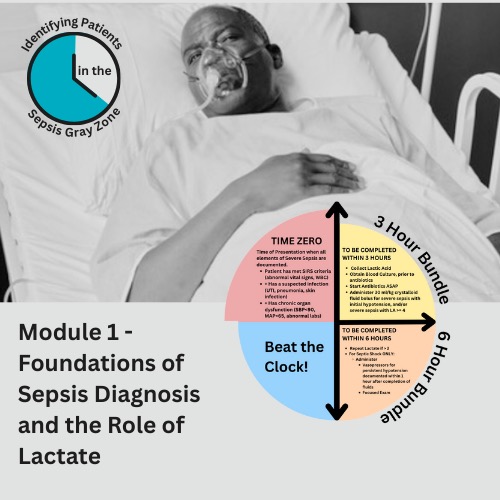
Module 1 – Foundations of Sepsis Diagnosis and the Role of Lactate
This module serves as a “level-set,” establishing a shared mindset and language around sepsis detection.
Key themes include:
- The physiological cascade sepsis triggers, revisiting what’s happening inside the body
- The rationale behind the Three- and Six-Hour Bundles of sepsis care, and when “Time Zero” actually begins
- The importance of collaboration across healthcare disciplines and settings
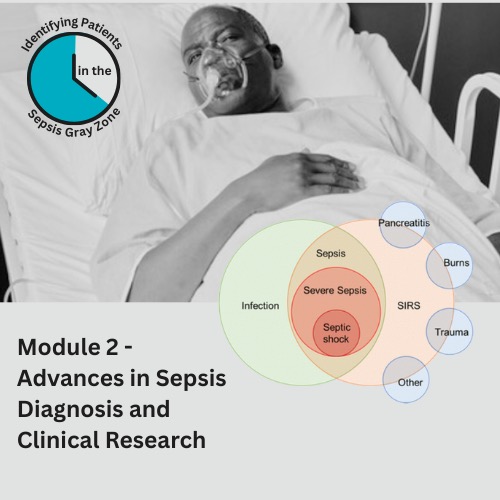
Module 2 – Advances in Sepsis Diagnosis and Clinical Research
Module 2 brings course participants up to speed on the latest clinical trial research.
Key themes include:
- The use of biomarkers, such as lactic acid and procalcitonin, in sepsis diagnosis
- The mindset to contextualize diagnostic tools so that they are not used as a “one-size-fits-all” approach
- The judgment necessary to support antibiotic stewardship without compromising patient care
Module 3 – Navigating the Grey Zone of Sepsis Diagnosis
The final module begins with an overview of the SeptiCyte RAPID test, then guides participants through classic presentations of sepsis to put their clinical reasoning to the test.
Key themes include:
- The appropriate use of SeptiCyte RAPID to distinguish sepsis from non-infectious systemic inflammation
- The value of sepsis care that is supported by tools and tests, but not dependent on them
- The key interventions most effective to prevent further patient decompensation