This World Thrombosis Day (October 13, 2024) – Be Blood Clot Aware!
- Do you have swelling in your leg or arm?
- Do you have tenderness and cramps in your leg?
- Do you have shortness of breath or are out of breath?
- Do you feel lightheaded or feel like passing out?
- Do you have chest or back pain when breathing?
Did you answer yes? Then, you may be experiencing a life-threatening condition – a blood clot (thrombosis).
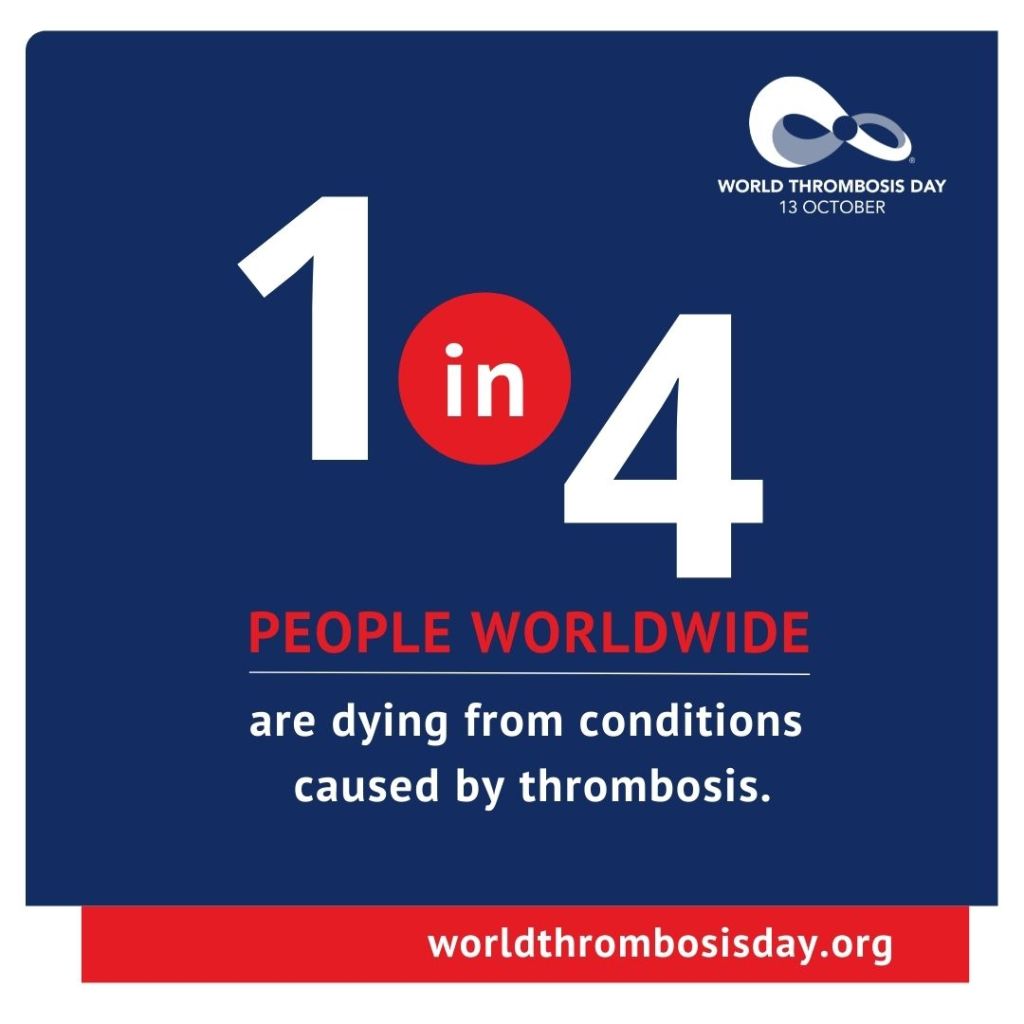
According to World Thrombosis Day, 1 in 4 people worldwide die from conditions caused by thrombosis.
Blood clots can happen to anyone.
Moreover, the incidence increases for patients in certain circumstances or who suffer from particular conditions.
Preventing Blood Clots in Pregnant Mothers

“The risks of VTE are 4-5 times higher for pregnant women than for non-pregnant women,” says MaryAnne Laffin, NP, CNM, FACNM (Past President at the National Perinatal Association).
Pulmonary embolism, a blood clot that occurs in the lungs, is one of the leading causes of death in maternal patients.
Mary D’Alton, MD, professor of obstetrics and gynecology in the Department of Obstetrics and Gynecology at Columbia University) believes that common and preventable causes of maternal death need to be addressed.
“Though research shows that certain patient populations are especially at risk for pregnancy-related deaths and complications, no woman is immune from them,” she says. “Especially in the first few days after delivery, otherwise healthy patients are at risk for hemorrhage, hypertension and pulmonary embolism. Pulmonary embolism lends itself to prevention measures that have been shown to work in other countries. Here at Columbia University Medical Center and New York-Presbyterian Hospital, we advocate the use of sequential compression devices as well as heparin for all patients undergoing cesarean delivery. The challenge before us is to reduce preventable maternal deaths and morbidity. It’s absolutely vital that hospitals adopt standardized preventative and treatment measures for all pregnant women. Multiple national organizations are collaborating to achieve this goal, and it is hoped that all healthcare facilities will participate in this effort.”
To help prevent blood clots in maternal patients, the Physician-Patient Alliance for Health & Safety convened a panel of national and international experts. This panel developed the OB VTE Safety Recommendations which provide four concise steps that:
- Assess patients for VTE risk with an easy to use automated scoring system
- Provide the recommended prophylaxis regimen, depending on whether the mother is antepartum or postpartum.
- Reassesses the patient every 24 hours or upon the occurrence of a significant event, like surgery.
- Ensures that the mother is provided appropriate VTE prevention education upon hospital discharge.
To view or download a copy of the OB VTE Safety Recommendations, please click here.
Both the Institute for Healthcare Improvement and National Perinatal Association endorse the use of the OB VTE Safety Recommendations.
Preventing Blood Clots in Cancer Patients
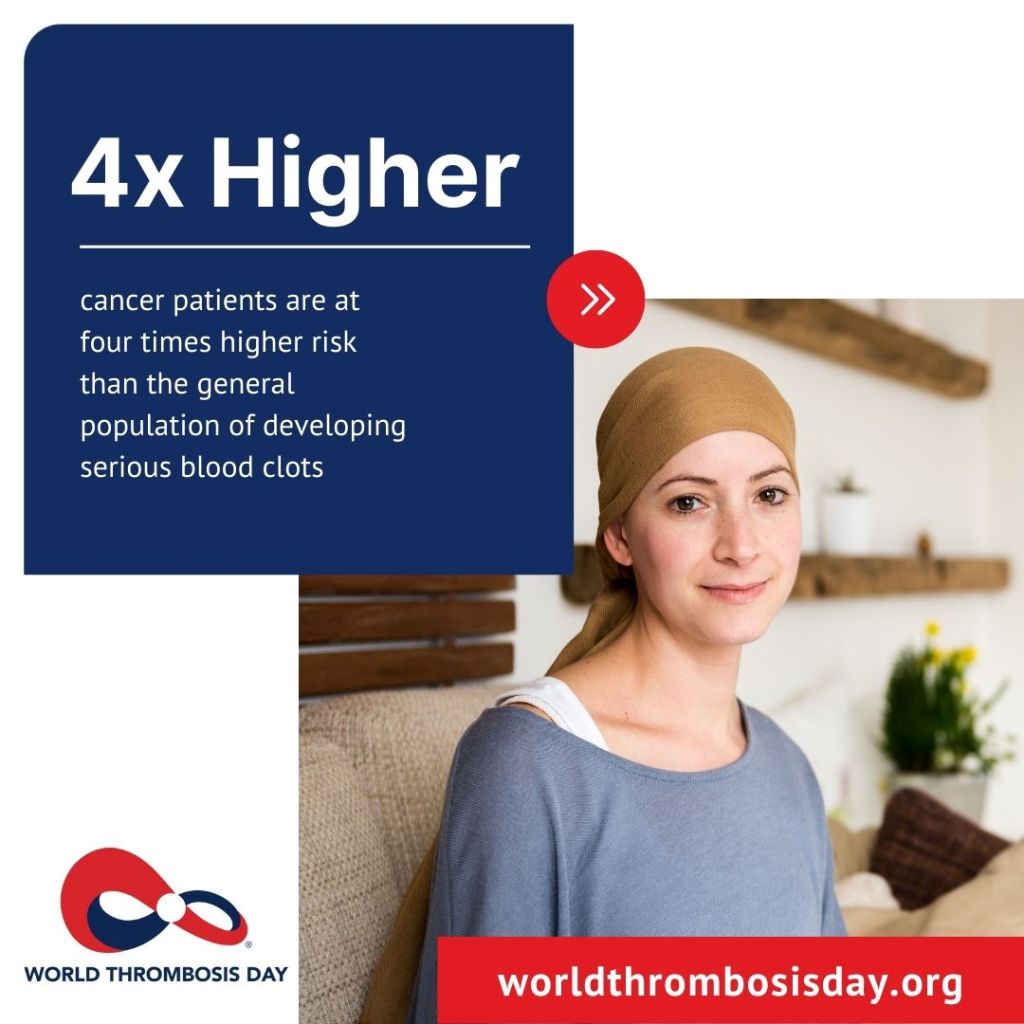
Thrombosis is a common complication of cancer and cancer treatments. It’s the second leading cause of death in cancer patients, after cancer itself. According to World Thrombosis Day, the risk of thrombosis in cancer patients is four times greater than patients without cancer.
Preventing Blood Clots in Stroke Patients
Stroke is a leading cause of death and disability in the U.S., with 800,000 cases occurring each year.
“Evidence shows that the health of approximately one in three stroke patients will deteriorate within 24 hours after suffering a stroke. This points to a critical need for intensive continuous monitoring of blood pressure, temperature, oxygenation and blood glucose of all stroke patients to rapidly assess and protect their health and safety,” explains Deborah V. Summers (Stroke Program Coordinator, Saint Luke’s Health System’s Marion Bloch Neuroscience Institute). “One of the deteriorating conditions that may develop within 24 hours of a stroke incident and which may be preventable is PE [pulmonary embolism], which may be fatal. If VTE [venous thromboembolism] risk factor and prophylactic measures are instituted early on, fatal PE may be prevented.”

The Stroke VTE Safety Recommendations help reduce death and disability among stroke victims due to VTE. Developed by a group of leading neurological health and patient safety experts brought together by the Physician-Patient Alliance for Health & Safety, the Stroke VTE Safety Recommendations incorporate the latest research.
The Stroke VTE Safety Recommendations provide four concise steps that:
- Assess all admitted patients with a stroke or rule out stroke diagnosis for VTE risk with an easy to use checklist.
- Provide the recommended prophylaxis regimen, which includes the use of mechanical prophylaxis and anticoagulant therapy.
- Reassesses the patient every 24 hours, prior to any surgical or procedural intervention or change in the patient’s condition.
- Ensure that the patient is provided appropriate VTE instructions and information upon hospital discharge or transition to rehabilitation.
The Stroke VTE Safety Recommendations can be viewed by clicking here.
3 Types of Patients At Risk for Blood Clots
Maternal patients, cancer patients, and stroke patients are particularly at risk of developing blood clots.
This World Thrombosis Day (October 13, 2024) – Be Blood Clot Aware!