Author: Mike

When Stress Triggers Health Risks: Protecting Patients in Recovery

Stress triggers health risks in recovery by raising cravings, disrupting sleep, and straining your body. Learn how to spot early signs & protect your sobriety.

By Alex Alonso (COO and Co-Founder, Bright Futures Treatment Center)

Stress isn’t always a single big event. Sometimes it’s a string of small things – poor sleep, a tense conversation, money pressure, an unexpected schedule change. But when it happens during recovery? It can hit harder than you expect. It can raise blood pressure, disrupt sleep, weaken your immune response, and increase cravings, especially early on in the process. To help you stay on the safe side of your sobriety, we’ll break down how and when stress triggers health risks and how you can protect your health without trying to power through it.

A visibly upset person holding their head outdoors at sunset - visual representation of when stress triggers health risks during recover

Continue reading “When Stress Triggers Health Risks: Protecting Patients in Recovery”
Advancing Women’s Heart Health Through Prevention, Equity, and Partnership

Cardiovascular disease remains the leading cause of death for women in the United States, yet it continues to be under-recognized, under-diagnosed, and under-treated—particularly among women who face economic, geographic, and systemic barriers to care. Despite decades of progress in cardiovascular medicine, far too many women still lack access to early screening, preventive services, and evidence-based education that could dramatically reduce their risk of heart attack, stroke, and other cardiovascular events.

This gap in care is not due to a lack of science. We know that early identification of risk factors such as hypertension, diabetes, and hyperlipidemia—combined with counseling, follow-up, and community support—can save lives. The challenge has been ensuring that these proven strategies reach the women who need them most.

Continue reading “Advancing Women’s Heart Health Through Prevention, Equity, and Partnership”

Advancing Opioid Safety: New Evidence on Opioid-Induced Respiratory Depression

Opioids remain an essential component of pain management across surgical, procedural, and medical care. Yet alongside their benefits lies one of the most serious and potentially life-threatening risks: opioid-induced respiratory depression (OIRD). Despite decades of clinical use, OIRD continues to contribute to preventable patient harm across care settings.

A newly published peer-reviewed paper on OIRD, co-authored by a multidisciplinary group of clinicians and researchers — including Michael Wong, JD, Executive Director of the Physician-Patient Alliance for Health & Safety (PPAHS) — brings renewed attention to this critical patient safety challenge. The paper synthesizes current evidence on OIRD mechanisms, risk factors, and opportunities for improved prevention and response, reinforcing what many clinicians already recognize: respiratory depression is often predictable, frequently detectable, and too often recognized too late.

Continue reading “Advancing Opioid Safety: New Evidence on Opioid-Induced Respiratory Depression”

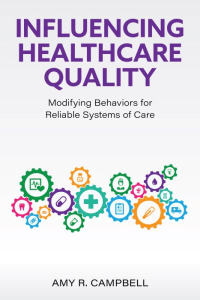
Stop Making Quality Too Hard: Why My New Book is Your Quality Companion

By Amy Campbell, PhD, RN, CPHQ, LSSBB

After more than 17 years in healthcare quality, I have seen it all, projects that soared and  projects that stumbled. Some of my biggest “fails” turned out to be my first attempts at  learning, and those lessons shaped how I approach improvement today. Too often, we make  quality work harder than it needs to be. My passion has always been teaching, whether it is  guiding executives through complex systems or mentoring graduate nursing students who are  just beginning their quality journey. But I have struggled to find a resource that feels  approachable, something you could pick up quickly, enjoy, and return to whenever you need  guidance. 

Continue reading “Stop Making Quality Too Hard: Why My New Book is Your Quality Companion”

Breaking the Stigma Around Dual Diagnosis

Editor’s Note: Breaking the stigma around dual diagnosis means seeing the full picture. Learn how truth, empathy, and integrated care lead to real recovery. In this thoughtful article, Pam Reiman discusses the situation when mental health problems and substance use collide.

By Pam Reiman, JD, LCSW, CAADC, CSAC (Executive Director at Bridging the Gaps, Inc.)

A person in a shirt with glasses looking stressed and leaning against the wall.The stigma around dual diagnosis shows up in quiet moments. A person with depression who drinks to cope may be told they “just need willpower.” Someone battling addiction might have their panic attacks dismissed as excuses. When the two conditions overlap, one often hides the other. The result is missed signs, unfair judgment, and delayed care.

Continue reading “Breaking the Stigma Around Dual Diagnosis”

PPAHS Launches New Clinical Trial Recruitment Services Page — Connecting Research with Patients Faster

The Physician-Patient Alliance for Health & Safety (PPAHS) is excited to announce the launch of our newly updated Clinical Trial Recruitment Services page — designed to help sponsors, CROs, and investigators recruit qualified trial participants faster, more ethically, and with patient safety at the center of every effort.

Every day of delay in a clinical trial is more than a cost — it’s a missed opportunity for patients to access innovative treatments, diagnostics, and preventive care. Our mission-driven team works to bridge that gap, helping research move forward while protecting and empowering participants.

Why This Matters

As a nonprofit patient safety organization, PPAHS brings a unique advantage to recruitment:

  • Mission before margin — We prioritize health outcomes over profit.
  • Established trust — Our deep connections with patient communities, clinicians, and advocacy groups foster engagement.
  • Expertise across therapeutic areas — From orthopedic recovery to sepsis, respiratory compromise, and rare diseases, we understand the challenges and know how to overcome them.

Our Process

Our approach is collaborative, ethical, and compliant:

  1. Collaborative Planning — We align closely with your team’s trial objectives, timelines, and eligibility criteria.
  2. Ethical & Compliant Outreach — All recruitment is IRB-approved, HIPAA-compliant, and patient-centered.
  3. Retention-Focused Support — We help participants through the entire process, ensuring higher retention and stronger data quality.

Explore the New Page

Our new Clinical Trial Recruitment Services page outlines our full capabilities and process for accelerating recruitment in a way that advances both science and patient well-being.

To visit our clinical trial recruitment page, please click here.

If you’re a sponsor, CRO, or investigator ready to move your trial forward while prioritizing patient safety, we’d love to talk.

The Value of Non-Opioid Therapy in Reducing Opioid Harms

Editor’s Note: The role of non-opioid therapy in reducing opioid harms lies in offering safe alternatives for pain relief. This article asks you to explore your options.)

By Drew McLaughlin (Director of Business Development, Little Creek Lodge)

A patient and a doctor talking
Image credit: https://www.pexels.com/photo/man-in-white-dress-shirt-sitting-at-the-table-7578803/

Opioid misuse continues to cause widespread harm across communities. The rising use of prescription painkillers has led to long-term dependency and avoidable suffering. Families are left dealing with emotional strain, while healthcare providers face overwhelming challenges. Many individuals never intended to misuse opioids but found themselves trapped by ongoing reliance. The role of non-opioid therapy in reducing opioid harms is to offer a different approach—one that reduces risks and supports long-term wellness. These methods are gaining recognition for their ability to treat pain without creating new problems. The focus on reducing opioid harm is shifting the conversation toward more sustainable and supportive care models that prioritize health without introducing avoidable danger.

Continue reading “The Value of Non-Opioid Therapy in Reducing Opioid Harms”

The Carlton at the Lake earns prestigious Enhanced Respiratory Care Accreditation

Chicago facility recognized by Physician-Patient Alliance for Health & Safety for exceptional patient care and safety standards

The Physician-Patient Alliance for Health & Safety (PPAHS) proudly announces that The Carlton at the Lake in Chicago, IL has successfully attained Enhanced Respiratory Care accreditation, meeting or surpassing the required standards of care for accreditation.

Receiving the Enhanced Respiratory Care Accreditation demonstrates The Carlton at the Lake’s continued commitment to patient safety and patient care. The Enhanced Respiratory Care program integrates best practices for ventilator support by emphasizing patient safety and patient care through evidence-based strategies, which includes specialized training for respiratory therapists, advanced weaning techniques, patient-centered care, and state-of-the-art ventilator technology, all to promote comprehensive care and optimal outcomes for patients requiring long-term mechanical ventilation.

From left to Right: Donna S. Lead Respiratory Therapist, Delylah W. Respiratory Therapist

Continue reading “The Carlton at the Lake earns prestigious Enhanced Respiratory Care Accreditation”

From Harm Reduction to Holistic Care: Evolving Approaches to Patient Safety in Addiction Treatment

Editors’ notes: In this article, Pat Crilley (Executive Director, Harmony Ridge Recovery Center) provides insights on evolving approaches to patient safety in addiction treatment. He explores the impact and challenges of holistic care.

By Pat Crilley (Executive Director, Harmony Ridge Recovery Center)

In the ever-changing field of addiction treatment, understanding how approaches to patient safety evolve is key. Traditionally, harm reduction strategies played a significant role in managing addiction. However, a shift towards holistic care has begun to reshape how we address this complex issue. This evolution is not just about new methods or techniques. It’s about building trust between patients and caregivers and acknowledging that every aspect of a person’s well-being is important. As we explore these changes, from harm reduction to holistic care, it’s clear that this journey in evolving approaches to patient safety in addiction treatment is reshaping our understanding and response to addiction.

Harmony Ridge Addiction

Continue reading “From Harm Reduction to Holistic Care: Evolving Approaches to Patient Safety in Addiction Treatment”

Physician-Patient Alliance for Health & Safety Launches CME Sepsis Courses “Identifying Patients in the Sepsis Gray Zone”

Free Three-Module Series Equips Clinicians to Navigate the Sepsis “Gray Zone”Grey Zone CME

The Physician-Patient Alliance for Health & Safety (PPAHS) is proud to release an accredited continuing medical education course designed to strengthen clinical judgment in the early identification of sepsis.  The series is free of charge, self-paced, and completely online.  

Continue reading “Physician-Patient Alliance for Health & Safety Launches CME Sepsis Courses “Identifying Patients in the Sepsis Gray Zone””