Author: Mike

Henry J. Carter Specialty Hospital receives Enhanced Respiratory Care Standards of Care Accreditation

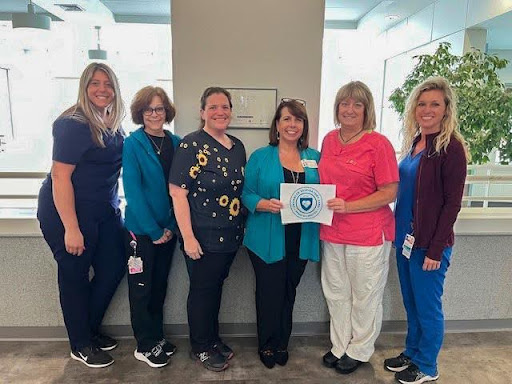
Henry J. Carter is the first long-term acute care hospital (LTACH) and Skilled Nursing Facility (SNF) in New York City to meet the new standard of respiratory care, championed by the Physician-Patient Alliance for Health & Safety.

The Physician-Patient Alliance for Health & Safety (PPAHS) is pleased to announce that Henry J. Carter (HJC) Specialty Hospital and Nursing Facility, a long-term care facility at NYC Health + Hospitals in New York, has met or exceeded the Enhanced Respiratory Care Standards of Care.

“At Henry J. Carter,” said the HJC CEO Floyd R. Long, “we strive to deliver the highest quality of both medical and rehabilitative care. As the only LTACH in New York City, we cannot ask less of ourselves. Weaning patients off medical support to enjoy their lives to the fullest has long been a priority: our facilities include a 14-bed weaning unit, and our Medical Ventilation weaning program boasts a 70% success rate exceeding both regional and national benchmarks. We are proud of the work we’ve done, and we appreciate the recognition from the Physician-Patient Alliance for Health & Safety (PPAHS). We’re looking forward to working closely with PPAHS in the future to ensure the best quality of care and quality of life for all of our patients.”

Continue reading “Henry J. Carter Specialty Hospital receives Enhanced Respiratory Care Standards of Care Accreditation”

3 Types of Patients At Risk for Blood Clots

This World Thrombosis Day (October 13, 2024) – Be Blood Clot Aware!

  • Do you have swelling in your leg or arm?
  • Do you have tenderness and cramps in your leg?
  • Do you have shortness of breath or are out of breath?
  • Do you feel lightheaded or feel like passing out?
  • Do you have chest or back pain when breathing?

Did you answer yes? Then, you may be experiencing a life-threatening condition – a blood clot (thrombosis).

According to World Thrombosis Day, 1 in 4 people worldwide die from conditions caused by thrombosis.

Continue reading “3 Types of Patients At Risk for Blood Clots”

Pregnant Mothers Need Better Access to Healthcare

By Michael W. Wong, JD (Executive Director, Physician-Patient Alliance for Health & Safety)

Access to Healthcare is a Patient Safety Issue for Pregnant Women

The United States spends more than all other high-income countries on healthcare – $12,742 per person in 2022. Unfortunately, this spending is not bringing enough access to healthcare for pregnant women.

A recent report by March of Dimes, “Nowhere to Go: Maternity Care Deserts Across the US,” highlights the dismal state of access to maternal care in the United States.

Continue reading “Pregnant Mothers Need Better Access to Healthcare”

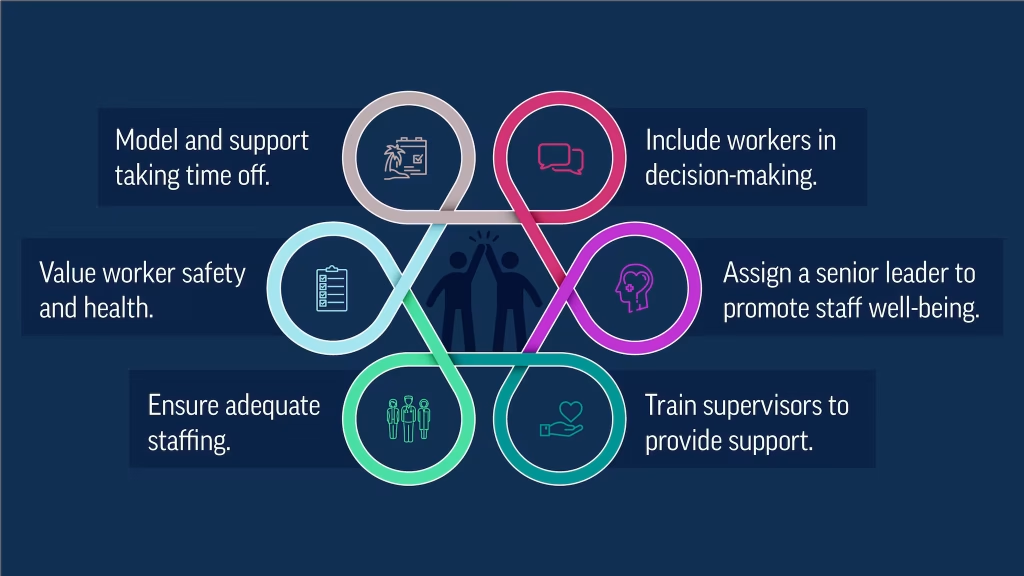
Emotional Safety Matters: Prioritizing Well-Being in Healthcare Environments

By: Dr. Jasmine Bonder, DNP, MSN, ACNP-BC, RN (Head of Clinical Care, Aidaly; Board of Advisors, Physician-Patient Alliance for Health & Safety) 

Emotional distress among healthcare providers is an increasingly pressing concern, with profound implications for their overall well-being and professional performance. According to a 2022 report by the Centers for Disease Control and Prevention (CDC), a significant 46% of healthcare workers reported experiencing burnout, a notable rise from the 14% reported in 2018. This alarming increase identifies the growing challenges faced by those in the healthcare sector, where emotional and psychological strain is more prevalent. Psychosocial hazards amongst healthcare workers have been attributed to poor and understaffed models, high acuity with minimal peer support and untrusted management systems. 

Emotional Safety

Continue reading “Emotional Safety Matters: Prioritizing Well-Being in Healthcare Environments”

Hospital for Special Care first in Connecticut to achieve Enhanced Respiratory Care Accreditation

  • Hospital for Special Care is the 4th largest, free-standing long-term acute care hospital in the U.S.
  • Both medical centers and medical service companies can receive Enhanced Respiratory Care Accreditation implemented in Tennessee since 2013. 

The Physician-Patient Alliance for Health & Safety (PPAHS) is pleased to announce that Hospital for Special Care (HFSC) in New Britain, CT has met or exceeded the Enhanced Respiratory Care Standards of Care.

Hospital for Special Care Accreditation
From left to right: Lindsey Merli, Supervisor, Marilyn Tipaldi, Lead RT, Joline Farris, RRT, Kendra Mato, RRT representing PPAHS, Pamela Held, RRT, MEd, Respiratory Services Director, Samantha Sowik, RT Clinical Coordinator (Not Pictured: Jen Andrulat, RRT, Nicole Morales, RRT, Laurie Miller, RRT, Carolyn Henry, Lead RRT)

Continue reading “Hospital for Special Care first in Connecticut to achieve Enhanced Respiratory Care Accreditation”

Learning from Other Countries to Improve Our Own Patient Safety

By Michael W. Wong, JD (Executive Director, Physician-Patient Alliance for Health & Safety)

In this thoughtful and well-written editorial in the Journal of Patient Safety, Olivia Lounsbury, MS (University of Oxford) and her colleagues urge patient safety advocates and clinicians to learn from each other to further their own goals of improving patient safety:

While national contexts differ, the potential for shared learning and collaboration between countries like the United States and United Kingdom is immense.

Lounsbury et. al. invite us to look at national patient safety initiatives, such as:

  • Finland’s Client and Patient Safety Strategy
  • New Zealand’s Quality and Safety Capability Framework 
  • UK’s National Health Service’s Patient Safety Strategy

So, this is what I did, and here’s what I found.

Continue reading “Learning from Other Countries to Improve Our Own Patient Safety”

You are invited to attend “The Pitch: Patient Safety’s Next Generation”

We invite you to attend a special screening of The Pitch: Patient Safety’s Next Generation.

From the Director of To Err Is Human: A Patient Safety Documentary (2018) comes a new documentary about the evolving role of technology in improving patient safety across medicine. 

The Pitch

Continue reading “You are invited to attend “The Pitch: Patient Safety’s Next Generation””

Three Ways To Move the Patient Safety Needle

Ways To Move the Patient Safety Needle – Provide Improved Opioid Use Disorder Treatment to Black Americans

A recent survey published in JAMA Network Open (JAMA Netw Open 2024;7[6]:e2419094) found that:

  • 61% of Americans are unaware that primary care physicians can prescribe medications for opioid use disorder (OUD), and 13% thought they could not do so.
  • A significant majority—82% of those with a history of opioid misuse and 74% who have not misused opioids—expressed willingness to seek such treatment from their primary care doctors or refer loved ones to care.

Continue reading “Three Ways To Move the Patient Safety Needle”

The Physician-Patient Alliance Celebrates 13 Years of Moving the Patient Safety Needle

From the desk of the Executive Director of the Physician-Patient Alliance for Health & Safety

By Michael Wong, JD (Executive Director, Physician-Patient Alliance for Health & Safety)

13 Years of Moving the Patient Safety Needle

In July of 2011, I published the first blog about Howard Snitzer who survived 96 minutes without a heartbeat. I was so astonished to hear what happened to Howard that I contacted Howard and the two of us went on to collaborate on further articles on the device that helped save him – capnography.

To see the Mayo Clinic video on Howard Snitzer, please go to https://www.youtube.com/watch?v=IsPq3oQZGNs&feature=youtu.be

Continue reading “The Physician-Patient Alliance Celebrates 13 Years of Moving the Patient Safety Needle”

Winning the War Against Sepsis

Editor’s Note: Michael Wong, JD (Executive Director, Physician-Patient Alliance for Health & Safety) interviewed Amy Campbell, PhD, RN, CPHQ (LSBB Quality Nurse Specialist, ECU Health; Chair, PPAHS Sepsis Advisory Board) after her presentation at the 4th World Sepsis Congress. This article discusses Ms. Campbell’s presentation and the need for both quantitive and qualitative assessments for sepsis patients.

Winning the War Against Sepsis at the 4th World Sepsis Congress

At the 4th World Sepsis Congress (April 25-26, 2023), more than 85 speakers from more than 35 countries presented on all aspects of sepsis, including the link to pandemics and AMR, the role of AI, ML, big data, patient safety, the impact of policy, novel trial design, and the latest research. The 4th World Sepsis Congress was attended by more than 15,400 registrations from 187 countries (for a copy of the full Congress report, please click here).

World Sepsis Congress CME - Sepsis Care

Continue reading “Winning the War Against Sepsis”