Monitoring is the catch word for this week’s must reads. It keeps patients safe and prevents avoidable patient harm. While St Joseph/Candler Hospital just celebrated 10 years of being “event free”, each year an estimated 20,800 to 678,000 patients managing their pain with patient-controlled analgesia will experience life-threatening, opioid-induced respiratory depression. If you are scared about asking your caregivers about monitoring, just say Dr. Robert Stoelting (President, Anesthesia Patient Safety Foundation) told you to. Continue reading “Weekly Must Reads in Patient Safety (Oct 17, 2014)”
Category: Alarm Fatigue
Weekly Must Reads in Patient Safety (Oct 3, 2014)
Patient monitoring seems to be the flavor of the day in this week’s articles and tweets … so, remember to monitor – Keep It On!
That said, better alarm management is needed to encourage more use of continuous electronic monitoring – could a woman’s death be due to alarm fatigue, as reported by Outpatient Surgery? Continue reading “Weekly Must Reads in Patient Safety (Oct 3, 2014)”
Weekly Must Reads in Patient Safety (Sep 26, 2014)
According to the CDC, the maternal death rate in the U.S. has more than doubled since 1987. So, with that shocking statistic in mind, we felt that we had to point out articles dealing with pregnancy … and a reminder that alarm fatigue just doesn’t annoy nurses … and, lastly, one interesting video from Derriford Hospital in the UK that is improving health outcomes for its patients by doing the “wiggle”. Continue reading “Weekly Must Reads in Patient Safety (Sep 26, 2014)”
Weekly Must Reads in Patient Safety (Sep 4, 2014)
With the Labor Day weekend, there were fewer articles posted, likely because people were enjoying the remaining days of summer.
However, here are some interesting reads: Continue reading “Weekly Must Reads in Patient Safety (Sep 4, 2014)”
Weekly Must Reads in Patient Safety (Aug 29, 2014)
With two articles driving most of the discussion social media this week—a Forbes article on alarm fatigue and an announcement of FDA approval for a new treatment for deep vein thrombosis (DVT)—we wanted to highlight a few articles readers might not have seen yet.
Have a good long weekend! Continue reading “Weekly Must Reads in Patient Safety (Aug 29, 2014)”
PPAHS: Patient Safety First, Second, and Third
24×7 Magazine recently spoke with Michael Wong, JD, executive director for the Physician-Patient Alliance for Health & Safety about patient safety and goals for PPAHS.
As 24×7 reports, although PPAHS is currently only focused on a few key patient safety issues, these issues account for a great number of adverse events. Continue reading “PPAHS: Patient Safety First, Second, and Third”
Introducing the PPAHS Patient Safety Podcast
by Sean Power
July 14, 2014
Over the past several months, members of the patient safety community have suggested that the Physician-Patient Alliance for Health and Safety (PPAHS) host a podcast to highlight current work in opioid safety, venous thromboembolism, and alarm fatigue.
We thought it was a great idea. We love presenting PPAHS stories at conferences and on our website, and there is so much progress being made in patient safety by others, we thought a podcast would be a perfect avenue to share those stories, too. Continue reading “Introducing the PPAHS Patient Safety Podcast”
10 ways to reduce alarm fatigue
by Gina Pugliese (Vice President, Premier Safety Institute)
In my post yesterday, I discussed the dangers of alarm fatigue. Alarm fatigue is considered the leading health technology hazard, according to the ECRI Institute’s top 10 health technology hazards.
And with 19 out of 20 hospitals (surveyed by the Physician-Patient Alliance for Health & Safety) ranking alarm fatigue as a top patient safety concern, it’s become an issue we need to address. And fast.
Sounding the Alarm on Alarm Fatigue
by Gina Pugliese (Vice President, Premier Safety Institute)
(Editor’s note: Gina Pugliese recently joined the Physician-Patient Alliance for Health & Safety advisory board. We are pleased and honored to have her expertise and counsel.)
Alarms are a serious matter in busy hospitals and ERs.
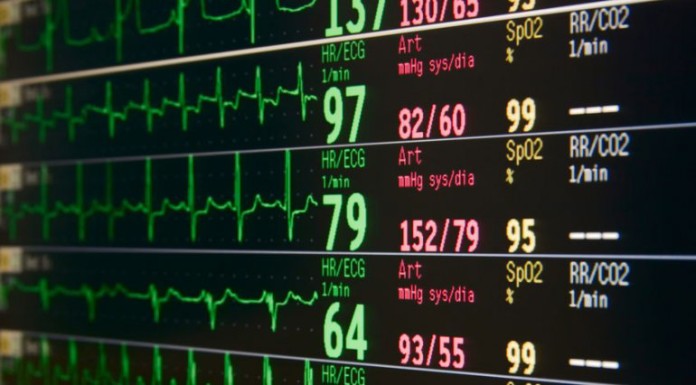
Think about all of the devices used in patient care – infusion pumps, cardiac monitors, pulse oximetry devices, blood pressure monitors, bedside telemetry and ventilators. All of these devices have alarms. Collectively, the devices in use on a single patient can produce hundreds of alarms every day. Some alarms are inconsequential. Some are malfunctions. Others signal impending crisis. Many are simply not heard.
Physician-Patient Alliance for Health & Safety adds Premier, Inc. safety expert Pugliese to Advisory Board
The Physician-Patient Alliance for Health & Safety (PPAHS) announced today that Gina Pugliese, RN, vice president of the Premier, Inc. Safety Institute, has joined the PPAHS Board of Advisors. Continue reading “Physician-Patient Alliance for Health & Safety adds Premier, Inc. safety expert Pugliese to Advisory Board”