Tag: Capnography

Opioids and Benzodiazepines Make a Deadly Combination for Hospitalized Patients

The combination of opioids and benzodiazepines can be a deadly combination. According to Baltimore’s City Health Commissioner Leana Wen, of the 44 people who die each day in the United States, approximately one in three of these unintentional overdose deaths from opioids also involves benzodiazepines.

As a result, the FDA recently issued its strongest warning about combined use of opioids and benzodiazepines, saying: Continue reading “Opioids and Benzodiazepines Make a Deadly Combination for Hospitalized Patients”

3 Ways to Make Opioids Safer

Last week we released an interview with Peggy Lange, RT, Director of the Respiratory Care Department at St. Cloud Hospital, on her team’s use of capnography in procedural and conscious sedation. Since then, it’s proven to be the most popular interview in our podcast series to-date.

The subject of the interview with Ms. Lange is a particularly topical one. Both the institutional and public eye has been focused on opioids and the ‘opioid epidemic’. And along with this, the body of knowledge related to their safe use continues to grow. Readers and listeners interested in additional content about capnography and opioid safety will be happy to find other interviews and webinars from PPAHS and across the web.

Continue reading “3 Ways to Make Opioids Safer”

5 Key Learnings to Create a Culture of Patient Safety with Capnography: An Interview With Peggy Lange, RT

The Physician-Patient Alliance for Health & Safety recently interviewed Peggy Lange, RT (Director of the Respiratory Care Department, St. Cloud Hospital) about a project that examined acute response team (ART) calls regarding patients who had received procedural or conscious sedation 24 hours prior to the event.

As Ms. Lange wrote in her article published in ADVANCE for Respiratory Care and Sleep Medicine, “Culture of Safety Includes Capnography”:

“We looked at patient monitoring practices in the outpatient procedural areas and we addressed the very real issue of too many alarms on the hospital patient floor. We also undertook a literature review for the project as we prepared to consider implementing capnography outside the operating room at our institution.

For the project, St. Cloud Hospital brought together a team of clinicians that included physicians, nurses, respiratory therapists, and pharmacists who represented different clinical areas like pain, sedation, endoscopy, and surgery.

In this interview, Ms. Lange discussed 5 key learnings from this project: Continue reading “5 Key Learnings to Create a Culture of Patient Safety with Capnography: An Interview With Peggy Lange, RT”

Physician-Patient Alliance for Health & Safety Celebrates Fifth Anniversary: 5 Tips for Improving Patient Safety

Today, the Physician-Patient Alliance for Health & Safety (PPAHS) celebrated its fifth anniversary.

In recognizing this milestone, Michael Wong, JD (Founder and Executive Director, PPAHS) pointed out five tips for improving patient safety from PPAHS in the last 12 months: Continue reading “Physician-Patient Alliance for Health & Safety Celebrates Fifth Anniversary: 5 Tips for Improving Patient Safety”

A Promise to Amanda Foundation Says “Capnography Saves Lives”: Physician-Patient Alliance for Health & Safety Remembers Amanda Abbiehl on 6th Death Anniversary

A Promise to Amanda Foundation Says “Capnography Saves Lives”: Physician-Patient Alliance for Health & Safety Remembers Amanda Abbiehl on 6th Death Anniversary

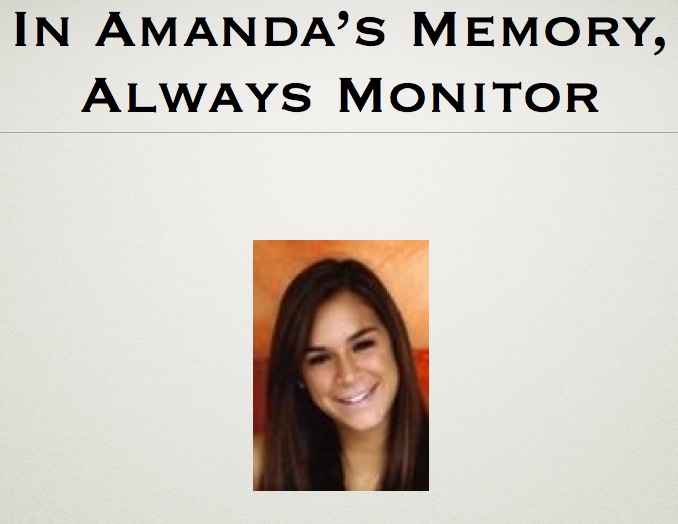
On the sixth death anniversary of 18-year old Amanda Abbiehl, July 17, 2016, the Physician-Patient Alliance for Health & Safety (PPAHS) noted that the motto of A Promise to Amanda Foundation – “Capnography Saves Lives” – is increasingly being realized.

“The passing of Amanda is a powerful reminder of the need for continuous electronic monitoring,” said Michael Wong, JD (Executive Director, PPAHS). “Since the inception of PPAHS, we have advocated for the safer use of opioids. Opioid Safety, for patients receiving opioids in hospital and healthcare facilities, is the management and minimization of the risks of respiratory compromise, adverse events, and death through continuous respiratory monitoring with pulse oximetry for oxygenation and with capnography for adequacy of ventilation.” Continue reading “A Promise to Amanda Foundation Says “Capnography Saves Lives”: Physician-Patient Alliance for Health & Safety Remembers Amanda Abbiehl on 6th Death Anniversary”

Keeping Patients Safe During Moderate Sedation

There are millions of medical procedures involving conscious or moderate sedation completed each year. In 2002, for example, there were 14.2 million colonoscopies performed. According to the U.S. National Library of Medicine, some of the moderate sedation procedures include:

  • Breast biopsy
  • Dental prosthetic or reconstructive surgery
  • Minor bone fracture repair
  • Minor foot surgery
  • Minor skin surgery
  • Plastic or reconstructive surgery
  • Procedures to diagnose and treat some stomach (upper endoscopy), colon (colonoscopy), lung (bronchoscopy), and bladder (cystoscopy) conditions.

In order to ensure the safety of patients undergoing procedures requiring moderate sedation, in January 2016, the Association for Radiologic & Imaging Nursing (ARIN) issued a Position Statement on Use of Capnography for Patients Who Receive Moderate Sedation/Analgesia.
Continue reading “Keeping Patients Safe During Moderate Sedation”

Patient Safety Advocate, Debbie Fox, Passes Away at 61

The Physician-Patient Alliance for Health & Safety is saddened to hear of the passing of Debbie Fox MBA, RRT-NPS (formerly Director, Respiratory Therapy, Wesley Medical Center).

Ms. Fox served on PPAHS’s board of advisors. She had retired from Wesley Medical Center and from the PPAHS board to take care of personal affairs. Continue reading “Patient Safety Advocate, Debbie Fox, Passes Away at 61”

Does Monitoring with Capnography Improve Patient Safety and Outcomes?

Two recently published studies seem to point to completely different results on the benefit of monitoring with capnography.

In the article, “ETCO2 Concentration Correlates With Trauma Mortality,” Anesthesiology News discusses the research by Danielle K. Bodzin, MD (anesthesiologist, University of Miami/Jackson Memorial Medical Center) and her colleagues: Continue reading “Does Monitoring with Capnography Improve Patient Safety and Outcomes?”

How To Avoid The Possibility Of Catastrophic Injury in Anesthesia

At the recent conference “Medical Malpractice Catastrophic Injury,” medical and legal experts discussed “The Distinct Dangers of Anesthesia: How To Avoid The Possibility of Catastrophic Injury, Notable Cases and Decisions, and Looking Towards the Future with Non-Human Administration.”

Speaking on the dangers of anesthesia were:

  • Victoria L. Vance (Partner, Chair, Health Care Practice, Tucker Ellis LLP)
  • Kenneth P. Rothfield, MD (System Vice President, Chief Medical Officer, Saint Vincent’s Healthcare, Ascension Health)
  • Michael Wong, JD (Founder/Executive Director, Physician-Patient Alliance for Health & Safety)

Continue reading “How To Avoid The Possibility Of Catastrophic Injury in Anesthesia”