Tag: Capnography

Respiratory Therapists Are Integral to Reducing Opioid-Related Adverse Events

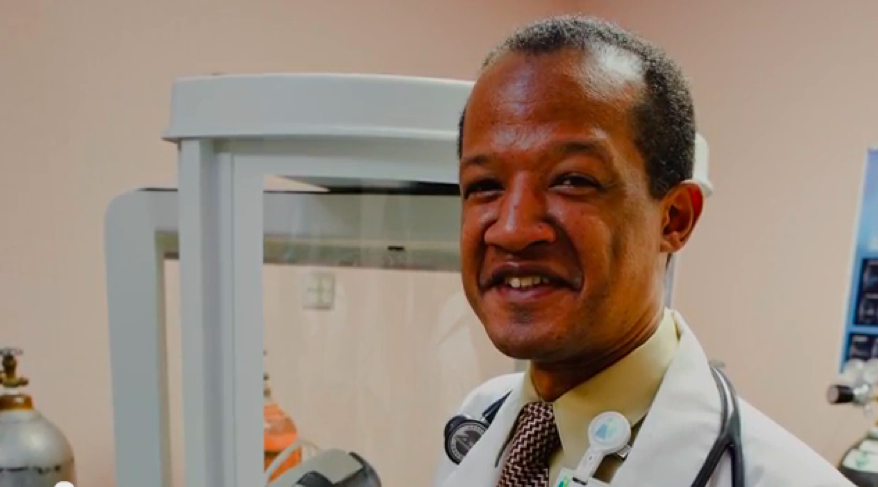
Harold Oglesby - Celebrating 10 Years's Event Free

In a recent interview with Harold Oglesby, RRT, Manager, The Center for Pulmonary Health, Candler Hospital, St. Joseph’s/Candler Health System (SJ/C), our discussion focused on the success factors that contributed to SJ/C’s 12 years free from opioid-related adverse events.

During the interview, Mr. Oglesby highlighted five key learnings from his experiences in implementing and continuously improving SJ/C’s QI initiative.  One of these learnings was the importance of involving Respiratory Therapists (RT) throughout the process. Continue reading “Respiratory Therapists Are Integral to Reducing Opioid-Related Adverse Events”

Patient Safety Weekly Must Reads (November 11, 2016)

This week in #patientsafety, the PPAHS interviewed Harold Oglesby, RRT, to uncover the strategies implemented to keep the Candler Hospital, St. Joseph’s/Candler Health System free from opioid-related adverse events for 12 years in a row.  From around the web, we’ve found 3 articles highlighting national efforts to raise the bar in patient safety education and one on “routine” medical procedures that go wrong. Continue reading “Patient Safety Weekly Must Reads (November 11, 2016)”

12 Years of Event-Free Opioid Use

The Physician-Patient Alliance for Health & Safety (PPAHS) recently interviewed Harold Oglesby RRT, Manager, The Center for Pulmonary Health, Candler Hospital, St. Joseph’s/Candler Health System (SJ/C).  

Continue reading “12 Years of Event-Free Opioid Use”

Top 10 Patient Safety Must Reads – October 2016

In October, the PPAHS celebrated it’s 5th anniversary.  In addition to building around the growing body of knowledge regarding accounting for OSA in patients receiving opioids, the PPAHS also announced a new campaign targeting VTE in orthopedic patients. Continue reading “Top 10 Patient Safety Must Reads – October 2016”

Patient Safety Weekly Must Reads (October 21, 2016)

This week in patient safety news, we featured a guest post article on pre-op screening and assessment for OSA.  We also found some great articles addressing the ICU, the opioid crisis, and the latest in wearable monitor studies. Continue reading “Patient Safety Weekly Must Reads (October 21, 2016)”

New Guideline on Pre-Op Screening and Assessment for OSA

This article was first published in Patient Safety Solutions on October 11, 2016.  As part of our efforts to bring in expert viewpoints from across the #patientsafety community, we have reposted this with permission.

By Bradley T. Traux, MD

Our regular readers are well aware of the numerous controversies and limited evidence base regarding perioperative issues in patients with known obstructive sleep apnea (OSA) or those suspected as being at high risk for OSA (see the list of prior columns at the end of today’s column).

The Society of Anesthesia and Sleep Medicine has just published “Guidelines on Preoperative Screening and Assessment of Adult Patients with Obstructive Sleep Apnea”. This is a most thorough evaluation of the evidence base regarding multiple issues related to OSA in patients about to undergo surgery. One is struck by the lack of strong evidence for almost all the recommendations in the guideline, though we are not surprised since we’ve previously discussed most of the controversial issues. Yet this consensus guideline uses common sense and is very practical and appropriately balances concerns for patient safety with utilization of resources and concerns over timing of surgery.

Below is their executive summary of the recommendations: Continue reading “New Guideline on Pre-Op Screening and Assessment for OSA”

Patient Safety Weekly Must Reads – October 14, 2016

This week from PPAHS we created a two-part article series examining patient monitoring strategies.  We also found 2 insightful articles adding to our knowledge of the opioid crisis, and a spotlight on alarm fatigue. Continue reading “Patient Safety Weekly Must Reads – October 14, 2016”

3 Keys To Successfully Implementing Capnography

capnography-waveform
Source: CapnoAcademy.com

As a follow-up to our latest podcast interview with Thomas W. Frederickson, MD, FACP, SFHM, MBA – lead author of the Society of Hospital Medicine RADEO guide (“Reducing Adverse Drug Events Related to Opioids”) – we focused on the advantages and limitations of pulse oximetry in monitoring patients for opioid-induced respiratory depression.

Most importantly, Dr. Frederickson highlighted that the alerts provided by pulse oximetry can be a lagging indicator of patient ventilation, particularly when supplemental oxygen is administered.  One solution to improving the care provided to patients is to understand that pulse oximetry is one part of a comprehensive monitoring strategy. Continue reading “3 Keys To Successfully Implementing Capnography”

Top 10 Patient Safety Must Reads – September 2016

As we flip our calendars to October, here’s a roundup of PPAH’s top posts and tweets from last month. Continue reading “Top 10 Patient Safety Must Reads – September 2016”

5 Strategies to Keep Patients Safe When Receiving Opioids

The Physician-Patient Alliance for Health & Safety (PPAHS) had the pleasure of interviewing Thomas W. Frederickson, MD, FACP, SFHM, MBA – lead author of the Society of Hospital Medicine RADEO guide (“Reducing Adverse Drug Events Related to Opioids”).  The guide is a comprehensive clinician manual created with the aim to decrease opioid-related adverse events in an inpatient setting.

In the first of this two-part interview, Dr. Frederickson discusses five key steps to identify and address patient conditions that pose a greater risk of respiratory depression.  For readers that have yet to listen to the podcast, please click here; it’s an insightful interview relevant for any clinician working in quality improvement or directly with patients prescribed opioids.

In part two, interviewer Pat Iyer and Dr. Frederickson switches gears and focuses on monitoring issues associated with caring for at-risk patients.  You can watch/listen to the interview below: Continue reading “5 Strategies to Keep Patients Safe When Receiving Opioids”