Patient Safety Week (March 10-16)
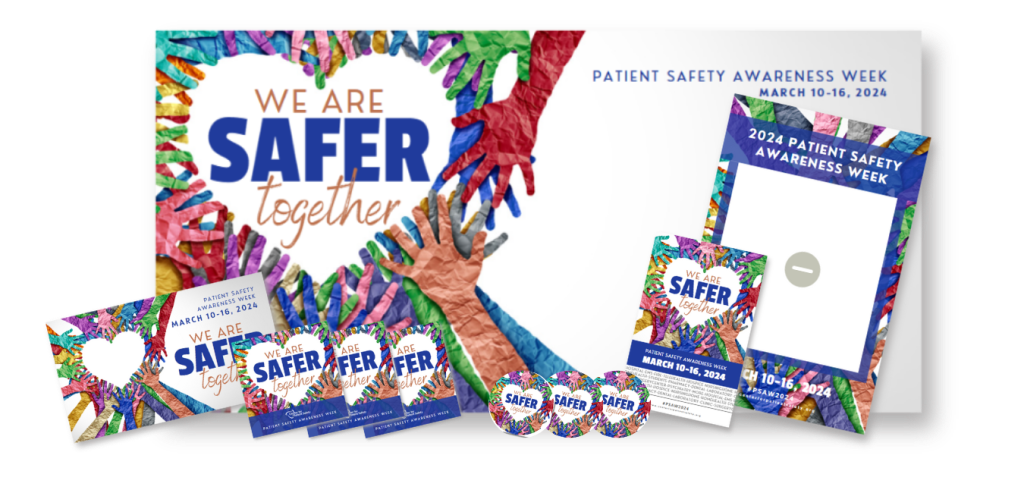
This week is Patient Safety Awareness Week. According to the Institute for Healthcare Improvement (IHI):
Patient Safety Awareness Week, an annual recognition event that occurs in March, is intended to encourage everyone to learn more about health care safety …
Although there has been real progress made in patient safety over the past two decades, current estimates cite medical harm as a leading cause of death worldwide.
The World Health Organization estimates that 134 million adverse events occur each year due to unsafe care in hospitals in low- and middle-income countries, resulting in some 2.6 million deaths. Additionally, some 40 percent of patients experience harm in ambulatory and primary care settings with an estimated 80 percent of these harms being preventable, according to WHO.
Some studies suggest that as many as 250,000 to 400,000 deaths occur in the United States each year as a result of errors or preventable harm. Not every case of harm results in death, yet they can cause long-term impact on the patient’s physical health, emotional health, financial well-being, or family relationships.
Preventing harm in health care settings is a public health concern. Everyone interacts with the health care system at some point in life. And everyone has a role to play in advancing safe health care.
So, for Patient Safety Awareness Week 2024, what needs to be improved?
While there are numerous patient safety issues, in this Must Reads in Patient Safety, we focus on two areas that our reading has taken us:
The Power of Vaccines to Improve Patient Safety
Karen Ekwueme, MD, ABFM, ABOIM wrote in “Vaccinations Saving Lives For Centuries”:
Oral history suggests that the origin of vaccination dates back to at least 1000 BCE. With all of the recent speculations, conjectures, and fears about the COVID-19 vaccination, the long history of vaccinations and their role as a key public health tool can often be forgotten.
Two studies from Centers for Disease Control and Prevention’s VISION Network found that the flu vaccine “reduced the risk of flu-related emergency department/urgent care visits and hospitalization for those 6 months to 17 years by almost half.”
Although vaccines cannot always prevent every person from acquiring the disease the vaccine was intended to guard against, how many of those now suffering from cognition and memory loss from COVID-19 might have been protected had they received the COVID vaccine?
A study published in the New England Journal of Medicine found that “Covid-19 was associated with longer-term objectively measurable cognitive deficits.”
Despite the effectiveness of vaccines, there continues to be vaccine hesitancy, which WHO (World Health Organization) defines as a “delay in acceptance or refusal of vaccines despite availability of vaccination services.” Moreover, vaccine hesitancy is most vocal among parents – “Vaccine-hesitant parents are a larger and more attentive group compared with vaccine refusers.”
In response to vaccine hesitancy among parents, the American Academy of Pediatrics (AAP) in its recent clinical report “strategies to help pediatricians and other health care providers address parental vaccine concerns and increase immunization rates.”
Women’s Health Inequities Must Be Eliminated
Reproductive Health – The overturning of Roe vs. Wade continues to impact women. In a recent ruling, the Alabama Supreme Court found that embryos are children. As a result of this ruling, the University of Alabama at Birmingham has halted in vitro fertilization (IVF) treatment.
Cardiac Health – Researchers recently found that women with public cardiac arrest less likely than men to receive CPR. Audrey L. Blewer, PhD, MPH (Assistant Professor of Family Medicine and Community Health and Population Health Sciences, Duke University School of Medicine said:
Females are less likely than males to receive bystander CPR despite neighborhood composition. We need to promote the public message that anyone can save a life. When someone encounters a cardiac arrest, they need to call 911, push hard and fast on the center of the person’s chest, and use a defibrillator (shock box) if available. Receipt of CPR should not differ based on the sex of the person having a cardiac arrest.