With the Labor Day weekend, there were fewer articles posted, likely because people were enjoying the remaining days of summer.
However, here are some interesting reads: Continue reading “Weekly Must Reads in Patient Safety (Sep 4, 2014)”
Promoting patient safety and improving the quality of patient care
Tag: alarm fatigue
With the Labor Day weekend, there were fewer articles posted, likely because people were enjoying the remaining days of summer.
However, here are some interesting reads: Continue reading “Weekly Must Reads in Patient Safety (Sep 4, 2014)”
by Sean Power
July 14, 2014
Over the past several months, members of the patient safety community have suggested that the Physician-Patient Alliance for Health and Safety (PPAHS) host a podcast to highlight current work in opioid safety, venous thromboembolism, and alarm fatigue.
We thought it was a great idea. We love presenting PPAHS stories at conferences and on our website, and there is so much progress being made in patient safety by others, we thought a podcast would be a perfect avenue to share those stories, too. Continue reading “Introducing the PPAHS Patient Safety Podcast”
by Gina Pugliese (Vice President, Premier Safety Institute)
In my post yesterday, I discussed the dangers of alarm fatigue. Alarm fatigue is considered the leading health technology hazard, according to the ECRI Institute’s top 10 health technology hazards.
And with 19 out of 20 hospitals (surveyed by the Physician-Patient Alliance for Health & Safety) ranking alarm fatigue as a top patient safety concern, it’s become an issue we need to address. And fast.
by Gina Pugliese (Vice President, Premier Safety Institute)
(Editor’s note: Gina Pugliese recently joined the Physician-Patient Alliance for Health & Safety advisory board. We are pleased and honored to have her expertise and counsel.)
Alarms are a serious matter in busy hospitals and ERs.
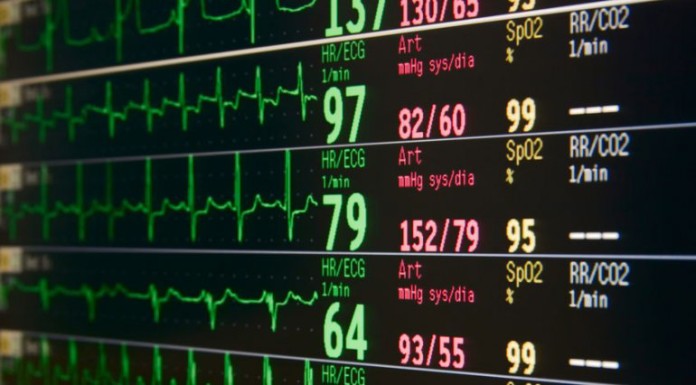
Think about all of the devices used in patient care – infusion pumps, cardiac monitors, pulse oximetry devices, blood pressure monitors, bedside telemetry and ventilators. All of these devices have alarms. Collectively, the devices in use on a single patient can produce hundreds of alarms every day. Some alarms are inconsequential. Some are malfunctions. Others signal impending crisis. Many are simply not heard.
Alarm fatigue, which can occur when physicians and nurses become desensitized to clinical alarms, could be reduced by improving the training of clinicians and customizing the default settings on alarms used to monitor patients, leading opioid safety experts said in a recent webinar. Continue reading “Top Patient Safety Experts Explore Ways to Reduce Alarm Fatigue in Webinar”
Training, education and individualization are some of the keys to better alarm management discussed by leading health experts during a recent webinar. The March 4, 2014 webinar was hosted Premier Safety Institute as part of their Advisor Live series.
Discussing the importance of training in reducing alarm fatigue, Joan Speigel, MD, Assistant Professor, Anesthesiology, Harvard Medical School and Beth Israel Deaconess Medical Center, said:
With end tidal CO2, of course, the training is the most important thing, is what to ignore and what not to ignore. Certainly it requires a lot of training. I don’t know how much I take it for granted that I understand the device very well—in capnography, that is. For the untrained person, what is going to trigger an alarm is very different than for myself.
Continue reading “Health Experts Discuss 4 Keys to Reducing Alarm Fatigue”
By Maria Cvach, DNP, RN, CCRN, and Michael Wong, JD
(This article first published in 24×7 Magazine on March 2, 2014. John Bethune, their editor-in-chief, also did an editorial (see page 8 in their February edition) on the nine technological solutions: http://24×7.alliedmedia360.com)
Patient monitors represent the good and the bad consequences of modern medical technology. The good results come when medical device alarms alert caregivers to clinical deterioration of their patients, allowing them to intervene. The bad ones happen when alarms sound too often, or for a nonactionable issue, and caregivers become desensitized or immune to the audible alarm sounds altogether.
In its “Sentinel Event Alert” number 50, headlined “Medical Device Alarm Safety in Hospitals,” The Joint Commission explained this dichotomy as follows: Continue reading “Nine Technological Solutions to Manage Alarm Fatigue”
by Sean Power
In honor of Patient Safety Awareness Week last week, the Premier Safety Institute gathered experts on opioid safety to participate in a webinar discussion. The panel, moderated by Gina Pugliese, RN, MS, vice president, Premier Safety Institute, Premier Inc., featured several authorities on opioid safety, including: Continue reading “Perspectives on Opioid Safety and Continuous Electronic Monitoring”
By Lynn Razzano, RN, MSN, ONCC (Clinical Nurse Consultant)
17-year old Mariah Edwards went in for a procedure that is performed countless times each year – a tonsillectomy. Recovering after the successful and very routine procedure, she was administered a dose of fentanyl to manage her pain. Although she was monitored continuously electronically, one of the attending nurses admitted on discovery that the monitor was muted for sound.
The settlement: $6 million. But, what really is $6 million to the parents of Mariah Edwards who have lost a child? What is the emotional toll to her nurses and other caregivers? Continue reading “Making the Case for Maximum Alarm Management and Prevention of Alarm Fatigue”
As a National Patient Safety Goal of The Joint Commission, “alarm fatigue” – which occurs when hospitals staffs become desensitized, overwhelmed or distracted by the myriad patient alarms that sound off around them each day – is now one of the most widely discussed issues in the healthcare.
The dialogue continued at the Society for Technology in Anesthesia (STA) Annual Meeting held Jan. 15-18 in Orlando, where along with presenting First National Survey of Patient-Controlled Analgesia Practices, Michael Wong, Executive Director of the Physician-Patient Alliance for Health & Safety (PPAHS) introduced a “Technological Alarm Awareness Wish List”. Continue reading “Technology wish list for reducing ‘alarm fatigue’ introduced at Society for Technology in Anesthesia Annual Meeting”