Tag: alarm fatigue

Preventing Opioid-Related Adverse Events with Capnography

Patient Monitoring

This year, St. Joseph’s/Candler Health System (SJ/C) celebrated 12 years free from opioid-related adverse events.  The PPAHS had the pleasure of interviewing Harold Oglesby, RRT, Manager to uncover the SJ/C team’s learnings in implementing the quality improvement project.

From the inception of the project, continuous electronic monitoring with capnography has been a cornerstone technology to keeping patients at SJ/C safe.  Mr. Oglesby and his team implemented a continuous monitoring program with capnography after identifying a need for reliable, early indication of patient decline in ventilation.  Since the initial pilot, the monitors have shown tangible results:

“There was a couple of ‘aha’ moments when we saw that capnography giving us, sometimes an hour earlier, [indication] of a patient that was getting into distress.”

Effective implementation is crucial whenever new technology is introduced in a clinical setting.  During our interview, Mr. Oglesby speaks to three key learnings to make continuous monitoring with capnography a success. Continue reading “Preventing Opioid-Related Adverse Events with Capnography”
Respiratory Therapists Are Integral to Reducing Opioid-Related Adverse Events

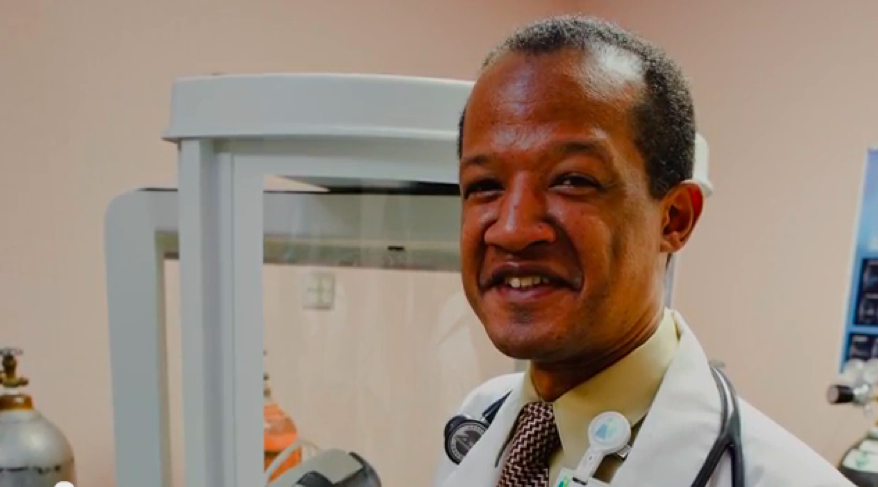
Harold Oglesby - Celebrating 10 Years's Event Free

In a recent interview with Harold Oglesby, RRT, Manager, The Center for Pulmonary Health, Candler Hospital, St. Joseph’s/Candler Health System (SJ/C), our discussion focused on the success factors that contributed to SJ/C’s 12 years free from opioid-related adverse events.

During the interview, Mr. Oglesby highlighted five key learnings from his experiences in implementing and continuously improving SJ/C’s QI initiative.  One of these learnings was the importance of involving Respiratory Therapists (RT) throughout the process. Continue reading “Respiratory Therapists Are Integral to Reducing Opioid-Related Adverse Events”

12 Years of Event-Free Opioid Use

The Physician-Patient Alliance for Health & Safety (PPAHS) recently interviewed Harold Oglesby RRT, Manager, The Center for Pulmonary Health, Candler Hospital, St. Joseph’s/Candler Health System (SJ/C).  

Continue reading “12 Years of Event-Free Opioid Use”

Patient Safety Weekly Must Reads – October 14, 2016

This week from PPAHS we created a two-part article series examining patient monitoring strategies.  We also found 2 insightful articles adding to our knowledge of the opioid crisis, and a spotlight on alarm fatigue. Continue reading “Patient Safety Weekly Must Reads – October 14, 2016”

3 Limitations to the Use of Pulse Oximetry

Image source: http://thedoctorweighsin.com/pulse-oximetry-false-alarms-on-post-surgical-floors/
Image source.

In PPAHS’ latest podcast, we spoke with Thomas W. Frederickson, MD, FACP, SFHM, MBA – lead author of the Society of Hospital Medicine RADEO guide (“Reducing Adverse Drug Events Related to Opioids”).  The RADEO guide is a comprehensive clinician manual created with the aim to decrease opioid-related adverse events in an inpatient setting. Continue reading “3 Limitations to the Use of Pulse Oximetry”

Top 10 Patient Safety Must Reads – September 2016

As we flip our calendars to October, here’s a roundup of PPAH’s top posts and tweets from last month. Continue reading “Top 10 Patient Safety Must Reads – September 2016”

Patient Safety Weekly Must Reads (September 23, 2016)

This week’s must reads brings forth key resources relevant to our latest podcast, as well as stories from around the web related to alarm fatigue, patient safety data collection, and opioid guidelines. Continue reading “Patient Safety Weekly Must Reads (September 23, 2016)”

Drawn Curtains, Muted Alarms, And Diverted Attention Lead To Tragedy In The Postanesthesia Care Unit

By Institute for Safe Medication Practices (ISMP)

Editor’s Note: This article first appeared on the ISMP website. It discusses the role that inadequate monitoring and muted alarms played in the recent tragic recent death of a 17-year old following a tonsillectomy. PPAHS has previously discussed deaths of pediatric patients following dental or oral procedures. We welcome your thoughts and comments on this issue.

Problem: Last April, a 17-year-old girl died following an uncomplicated tonsillectomy performed in an outpatient ambulatory surgery center after receiving a dose of IV fentaNYL in the postanesthesia care unit (PACU). The case made headline news again recently when a civil lawsuit filed by the teen’s parents was resolved. While it is too late to reverse the tragic outcome of this case, we call upon all hospitals and outpatient surgery centers to learn from the event and take action to prevent a similar tragedy in your facility. Continue reading “Drawn Curtains, Muted Alarms, And Diverted Attention Lead To Tragedy In The Postanesthesia Care Unit”

3 Questions to Ask About Post-Operative Care

by Mario Cattabiani (Director of Communications at Ross Feller Casey, LLP in Philadelphia)

Surgery can be a scary thing for any patient. Whether it is a minor procedure or life-saving necessity, all types of surgical procedures come with some degree of risk. To help ease your fears, it is a natural reaction to want to learn about everything that is going to happen during the procedure. You probably want to find out exactly what you need to do beforehand, what type of procedure is planned, who will be performing it, what the recovery will be like and when will you be able to go home. While all of these concerns and questions are completely valid, an important aspect of the process is left out.

Did you know that the first few hours after a surgical procedure are often just as risky as the actual operation? Just because you make it out of the operating room does not necessarily mean that you are in the clear just yet. While that can be a terrifying thought to come to grips with, it is the reality. Continue reading “3 Questions to Ask About Post-Operative Care”