Tag: respiratory compromise

Minnesota RTs Help Implement Continuous Capnography Program

peggy lange
Peggy Lange, BA, RRT (RT Department Director, St. Cloud Hospital in St. Cloud, MN)

A recent article published by the American Association for Respiratory Care (AARC) has highlighted how respiratory therapists (RT) can play an integral role in using capnography to detect the signs of respiratory depression.  The post focuses on the experiences of Peggy Lange, BA, RRT (RT Department Director, St. Cloud Hospital in St. Cloud, MN).

Over a three month period, St. Cloud Hospital ran a pilot program to test the effectiveness of continuous capnography monitoring Center for Surgical Care, PACU, surgical care units, interventional radiology, electrophysiology lab, and emergency trauma center.  The trial was successful, proving the monitors gave an early alert to the signs of respiratory distress, as well as resolving issues caused by nuisance alarms – particularly with patients experiencing sleep apnea or periods of hyperventilation.  As a result, continuous capnography monitoring was implemented hospital-wide. Continue reading “Minnesota RTs Help Implement Continuous Capnography Program”

Opioid Deaths Are (Still) Preventable: Remembering Leah

Leah

Leah walked into a Los Angeles hospital a healthy, 11-year old girl.  She needed an elective surgery to repair a condition called pectus carinatum.  Despite delays, the surgery went well, but Leah was in considerable pain; to manage it, she was given escalating doses of fentanyl, along with Ativan.  

Her mother, Lenore Alexander, was concerned by Leah’s increasing unresponsiveness – but was assured by staff that Leah would be ready to walk out of the hospital in the morning.  Exhausted, Lenore took a nap by her daughter’s bedside; it would be the last time Leah was seen alive.  Lenore woke to find Leah dead in bed.

In 2012, Lenore wrote an article for PPAHS asking if continuous monitoring would have saved her daughter, Leah.  The answer, then, was a resounding “yes”.  During her hospital stay, Leah received only infrequent spot checks from staff to confirm her condition despite the administration of powerful opioids.  If only she were monitored with capnography and pulse oximetry – we would not have another tragic story to tell.

Now, on the 14th anniversary of Leah’s death, we ask the same question: would continous monitoring have saved Leah’s life?   Continue reading “Opioid Deaths Are (Still) Preventable: Remembering Leah”

Top 10 Patient Safety Must Reads – November 2016

We’re saying “hello” to December, and looking back at some of PPAHS’ top posts and tweets in November.

Top Posts

This month, as part of our new campaign targeting VTE in orthopedic patients, PPAHS was invited to become a partner of World Thrombosis Day!  We also provided bittersweet coverage regarding opioid safety, including celebrating St. Joseph’s/Candler Health System’s (SJ/C) 12-years event-free and opioid safety’s place – once again – on ECRI’s Top 10 Health Technology Hazards. Continue reading “Top 10 Patient Safety Must Reads – November 2016”

Preventing Opioid-Related Adverse Events with Capnography

Patient Monitoring

This year, St. Joseph’s/Candler Health System (SJ/C) celebrated 12 years free from opioid-related adverse events.  The PPAHS had the pleasure of interviewing Harold Oglesby, RRT, Manager to uncover the SJ/C team’s learnings in implementing the quality improvement project.

From the inception of the project, continuous electronic monitoring with capnography has been a cornerstone technology to keeping patients at SJ/C safe.  Mr. Oglesby and his team implemented a continuous monitoring program with capnography after identifying a need for reliable, early indication of patient decline in ventilation.  Since the initial pilot, the monitors have shown tangible results:

“There was a couple of ‘aha’ moments when we saw that capnography giving us, sometimes an hour earlier, [indication] of a patient that was getting into distress.”

Effective implementation is crucial whenever new technology is introduced in a clinical setting.  During our interview, Mr. Oglesby speaks to three key learnings to make continuous monitoring with capnography a success. Continue reading “Preventing Opioid-Related Adverse Events with Capnography”

Respiratory Therapists Are Integral to Reducing Opioid-Related Adverse Events

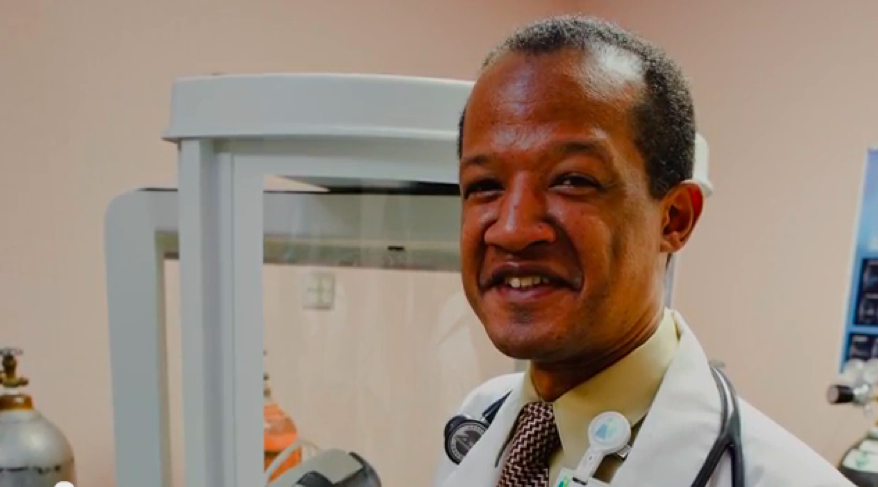
Harold Oglesby - Celebrating 10 Years's Event Free

In a recent interview with Harold Oglesby, RRT, Manager, The Center for Pulmonary Health, Candler Hospital, St. Joseph’s/Candler Health System (SJ/C), our discussion focused on the success factors that contributed to SJ/C’s 12 years free from opioid-related adverse events.

During the interview, Mr. Oglesby highlighted five key learnings from his experiences in implementing and continuously improving SJ/C’s QI initiative.  One of these learnings was the importance of involving Respiratory Therapists (RT) throughout the process. Continue reading “Respiratory Therapists Are Integral to Reducing Opioid-Related Adverse Events”

Patient Safety Weekly Must Reads (November 11, 2016)

This week in #patientsafety, the PPAHS interviewed Harold Oglesby, RRT, to uncover the strategies implemented to keep the Candler Hospital, St. Joseph’s/Candler Health System free from opioid-related adverse events for 12 years in a row.  From around the web, we’ve found 3 articles highlighting national efforts to raise the bar in patient safety education and one on “routine” medical procedures that go wrong. Continue reading “Patient Safety Weekly Must Reads (November 11, 2016)”

12 Years of Event-Free Opioid Use

The Physician-Patient Alliance for Health & Safety (PPAHS) recently interviewed Harold Oglesby RRT, Manager, The Center for Pulmonary Health, Candler Hospital, St. Joseph’s/Candler Health System (SJ/C).  

Continue reading “12 Years of Event-Free Opioid Use”

Top 10 Patient Safety Must Reads – October 2016

In October, the PPAHS celebrated it’s 5th anniversary.  In addition to building around the growing body of knowledge regarding accounting for OSA in patients receiving opioids, the PPAHS also announced a new campaign targeting VTE in orthopedic patients. Continue reading “Top 10 Patient Safety Must Reads – October 2016”

Patient Safety Weekly Must Reads (October 21, 2016)

This week in patient safety news, we featured a guest post article on pre-op screening and assessment for OSA.  We also found some great articles addressing the ICU, the opioid crisis, and the latest in wearable monitor studies. Continue reading “Patient Safety Weekly Must Reads (October 21, 2016)”